
Respondents to a survey by Shlomo Filber published last night (Thursday) on Channel 14 revealed strong public criticism of the diplomatic moves against Iran.
According to the data, an overwhelming majority of 84% believe that President Donald Trump capitulated to Iran by signing the agreement with it. In contrast, only 9% believe that the former president acted correctly, and an additional 7% responded that they had no position on the issue.
These figures reflect a deep lack of confidence in the ability of agreements to restrain the Iranian regime.
Regarding Israel's direct military campaign against Iran, the public presents a divided position, but tends to the positive side. More than half of those surveyed - 53%, define the military moves as a "victory." On the other hand, 41% of the respondents see these actions as a "failure," a figure that indicates significant disagreement regarding the effectiveness of the moves and the achievements of the campaign in the long term.
The public is taking a firm stance against the political pressure from the United States: In response to the question of how Israel should act if the US demands that it withdraw from southern Lebanon, 80% of those surveyed replied that Israel should resist the demand. Only 17% believe that the American request should be met and the withdrawal should be agreed to.
These results emphasize the broad public demand to maintain the IDF's achievements in the region, even at the cost of diplomatic confrontation with the administration in Washington.
And what does the public think about the crisis with the US? 54% of the public think that this is a passing crisis.
And what is happening in the mandate arena? The survey data indicates that there are significant changes within the opposition camp.
While the Likud Party remains the largest party in Israel with 33 seats, the main drama in the poll is recorded in the left-wing bloc, where the Yesh Party, led by Gadi Eisenkot, jumps to 20 seats and becomes the second largest party in the Knesset.
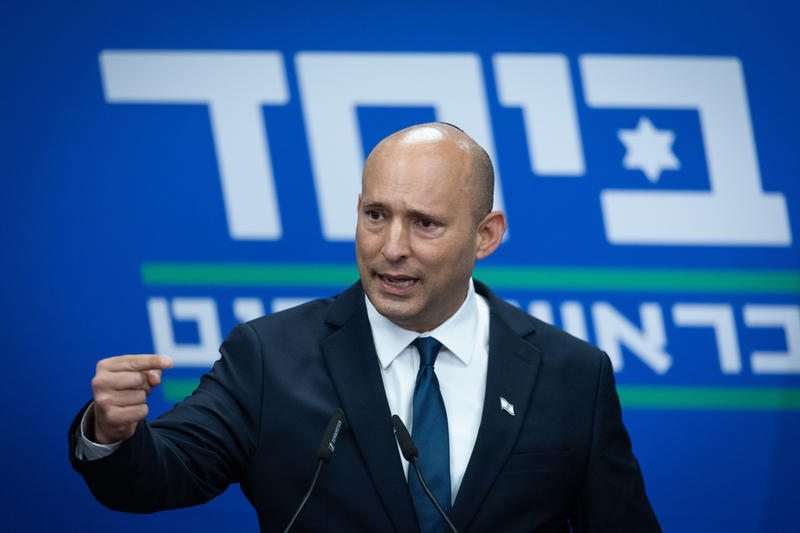
On the other hand, Naftali Bennett's 'Together' party continues its weakening trend and drops to only 10 seats - a gap of ten seats from Eizenkot.
Shas receives 10 seats, the Democrats 9, Yisrael Beiteinu 8 and United Torah Judaism 8. Otzma Yehudit receives 7 seats, shared with 6, Ra'am 5 and Religious Zionism 4 seats.
The Blue and White party continues to remain below the threshold with only 1.81% of support.
In terms of blocs, the right-wing bloc maintains its lead with 62 seats. The left-wing bloc has 47 seats, while the Arab parties have 11 seats.
The data proves that even in a scenario where Naftali Bennett runs in the elections, the right-wing bloc continues to enjoy a solid majority.
On the question of suitability for the premiership, Netanyahu continues to lead by a significant margin with 45% support. Gadi Eisenkot comes in second with 34%, a figure that strengthens his position as the most prominent candidate in the opposition camp. Naftali Bennett receives only 12%, while Avigdor Lieberman receives 8% and Benny Gantz only 1%.
Disclaimer: The survey, conducted by NEXT DATA with the participation of 1552 adults from the general population, was conducted today, June 18, 2026. Data analysis: Shlomo Filber.