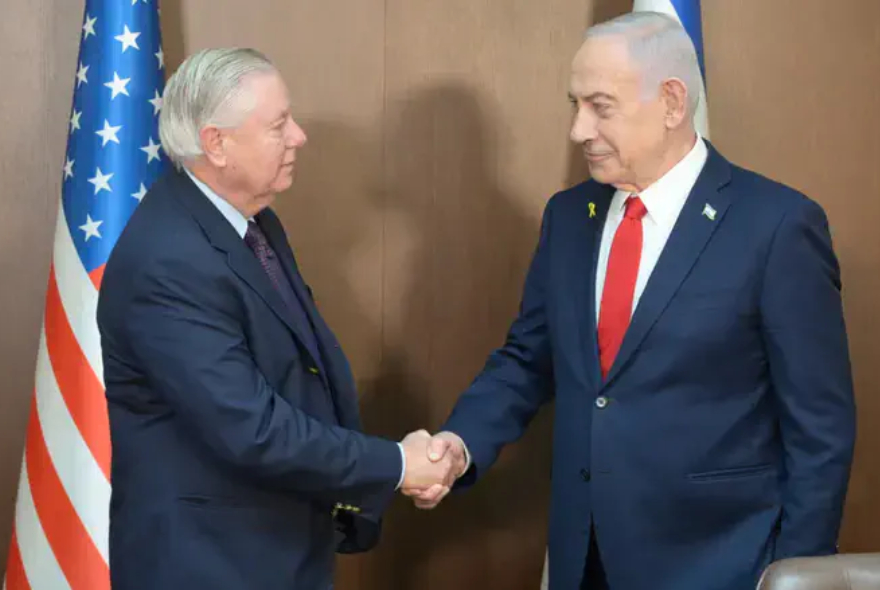
In light of US President Donald Trump's statements that his and Iran's negotiating teams are very close to an agreement, Israel is also waiting to see whether the diplomatic blitz will succeed in leading to the signing of a memorandum of understanding between the parties - which would allow Iran to celebrate a victory.
Senator Lindsey Graham, who is considered close to President Trump, wrote this evening on his X Network account: "If a deal is signed based on the belief that the Strait of Hormuz cannot be protected from Iranian terrorism, and when Iran still possesses the ability to destroy key oil infrastructure in the Gulf, then it will be portrayed as a dominant power that demands a diplomatic solution.".
He added: "This combination, in which Iran is perceived as having the ability to permanently terrorize the Strait, and can cause enormous damage to the oil infrastructure in the Gulf, constitutes a significant change in the balance of power in the region and in the long term will be a nightmare for Israel.".
He emphasized: "It begs the question of why the war started in the first place. I am personally skeptical of the idea that Iran cannot be prevented from terrorizing the Strait, or that the region cannot defend itself against Iranian military capability. It is important that we get this right.".
Roger Wicker, the senior Republican senator and chairman of the Senate Armed Services Committee, also reacted against the emerging agreement: "The 60-day ceasefire in question - in the belief that Iran will act in good faith - will be a disaster. Everything achieved in Operation Epic Fury will be for naught! We are at a moment that will define President Trump's legacy.".
Fox News host and Trump supporter Mark Levin also commented on the reports, writing: "History teaches us that peace agreements are best made after the enemy is defeated or surrenders.".
The Financial Times reported that the United States and Iran are close to a deal to extend the ceasefire by 60 days. According to the report, there will be a gradual opening of the Strait of Hormuz and a commitment to discuss the dilution or removal of Iran's enriched uranium.
It was also reported that the United States will ease the blockade of Iran's ports and sanctions on the country, and will also agree to the gradual thawing of Iranian assets outside the country.
Iranian Foreign Ministry spokesman Esmail Bakai told Iranian media: "We are in the final stages of formulating a memorandum of understanding to end the war." He added that the issues being discussed at this stage "concentrate on ending the war and issues related to the thawing of Iran's frozen assets.".