Negotiations between Iran and the United States began this afternoon (Saturday) in Islamabad, the capital of Pakistan.
According to a report in 'Kan News', the talks took place face-to-face between the representatives of the countries, in the presence of the Pakistani leadership - Prime Minister Shahbaz Sharif, Foreign Minister Ishaq Dar, and Pakistani Army Chief Asam Munir.
After about two hours, the parties went on a break and returned, with reports in the background that there is a possibility that the talks will be extended into tomorrow.
However, according to a report in the Financial Times, the negotiations have reached an impasse regarding the issue of the Strait of Hormuz.
One source claims that Iran insists on maintaining control of the strait, and that it will also be able to collect toll fees at the crossing - and refuses alternatives of joint control.
Official media in Iran claim that a phase of face-to-face talks has ended and that after the conclusion of this phase, the expert teams of the negotiating delegations are now exchanging written messages.
President Donald Trump spoke to a News Nation journalist and threatened that if the talks fail, the United States would be prepared to resume the war. He promised that it would soon be possible to know whether the Iranians were acting in good faith.
Trump claimed that the Strait of Hormuz will open and not in the distant future - and that people also see that there are energy alternatives to the Strait.
Trump also announced that he had begun a process to clear mines in the Strait of Hormuz and attacked the countries of the world that are not helping. He wrote on his social media: "Amazingly, they do not have the courage or the will to do this job themselves.".
According to a report in the Iranian Tasnim news agency, the negotiations in Islamabad were halted today before they began, after the Iranian delegation demanded that the United States discuss with Pakistan its violation of the ceasefire terms - as a condition for opening the talks. Chief among the violations claimed by the Iranians - the continued freezing of Iranian assets, and the failure to enforce the ceasefire in Lebanon.
The PRESS TV channel quoted the Iranian Foreign Ministry spokesman, who claimed that the ceasefire in Lebanon was part of the agreement and the Pakistani side confirmed this.
According to one source, Pakistani officials asked the Iranian delegation to enter negotiations without preconditions, so that all issues would be discussed around the negotiating table.
A Lebanese official told the Saudi Al-Hadath channel that American guarantees have been received that Israel will not attack the Beirut area until this coming Tuesday, the date of the first meeting between the Lebanese ambassador to the United States and Israeli ambassador Yechiel Leiter.
American officials told the Wall Street Journal that two US Navy destroyers passed through the strait today, for the first time since the outbreak of the war. The same officials claimed that no warnings were issued, contrary to Iranian claims, and that the passage was described as a routine mission.
United States Vice President J.D. Vance, Steve Witkoff, and Jared Kushner landed in Pakistan this morning to open negotiations with Iran as part of the ceasefire.
A few hours after their landing, the White House announced that the Vice President had met with the Prime Minister of Pakistan. Pakistan reported that the conversation was a preliminary call for negotiations between the Gulf countries and Iran.
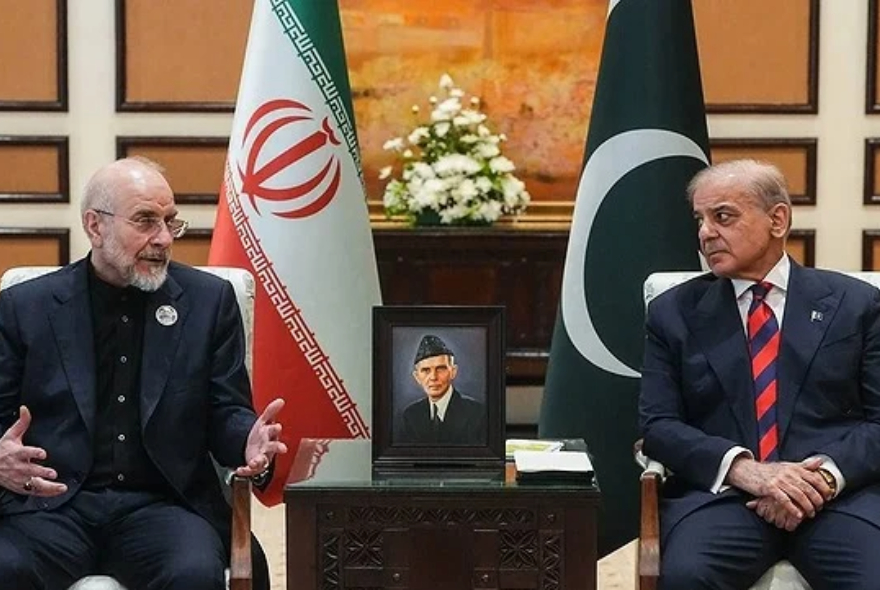
Earlier, it was reported that the Iranian side also held a meeting with the Pakistani Prime Minister. Iranian media reported that the delegation from Tehran conveyed to the Pakistani Prime Minister its demands and 'red lines,' which include, among other things, control of the Strait of Hormuz, payment of war reparations, release of blocked assets, and a ceasefire throughout the region.