Survey data conducted by the Direct Polls Institute, headed by Zuriel Sharon, published this evening (Monday) on the i24 channel, indicates a shift in the bloc map, with a slight strengthening of the coalition.
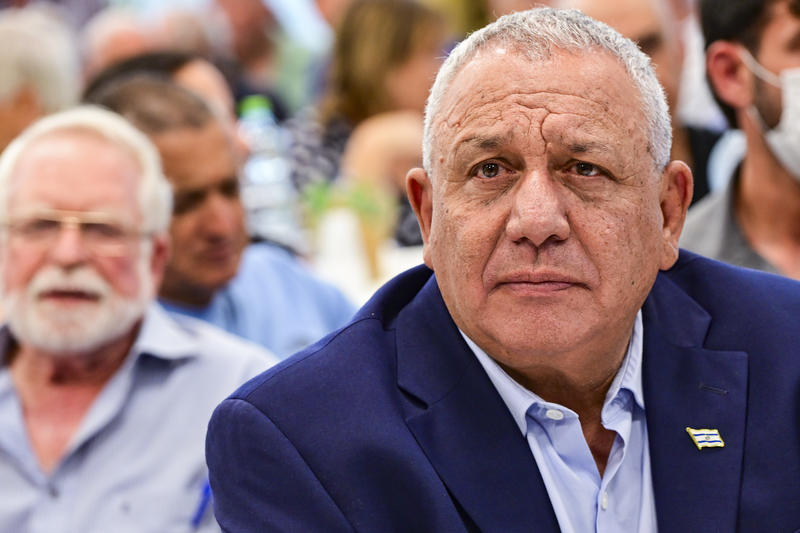
According to the poll, the Likud party is leading with 29 seats, an increase of one seat compared to the poll 11 days ago. Gadi Eisenkot's Left Party loses one seat, dropping to 21 seats. Yair Golan's Democrats also lose one seat, dropping to 10.
Bennett's 'Together' party maintains stability and receives 9 seats. The Shas party also maintains its strength and remains at 9 seats. Yisrael Beytenu strengthens by one seat and receives 9 seats. United Torah Judaism is stable with 8 seats, Otzma Yehudit strengthens by one seat and also stands at 8 seats.
The Joint List remains with 7 seats, Religious Zionism loses a seat - and receives only 5 seats. The Ra'am party also has 5 seats.
Four parties do not pass the threshold: Zionist Home of Tropper and Handel, Zehut, the Economic Party, and Gantz's Blue and White.
The map of the blocs: the coalition with 59 seats, a strengthening of one seat compared to the previous poll, with the opposition and the Arabs weakening and receiving 61.
On the question of suitability for the prime ministership: When you pit Netanyahu against Eisenkot, the prime minister receives 45% who prefer him, and 44% who prefer to see Eisenkot head the government. 11% replied that they don't know.
When you pit Netanyahu against Bennett, the results are unequivocal. 47% prefer to see Netanyahu at the helm of the government, compared to 37% who prefer Bennett. 16% responded that they don't know.
The sample was collected and compiled by Direct Polls Ltd., headed by Tzuriel Sharon, for the i24NEWS channel, on July 27, 2026, using a digital system combined with a panel, among 525 adult respondents (18+) who constitute a representative sample of the general population in Israel. The statistical sampling error is ±4.2% with a probability of 95%.