

The Ministry of the Interior this week unveiled for the first time the Ministry of the Interior's Local Government Status Report for 2026 - a comprehensive report that centralizes in one place the current situation of all local authorities in Israel.
The report, which was formulated at the initiative of Interior Ministry Director General Israel Ozan, presents thousands of pieces of data on the structure of local government, the municipal economy, budgets, human capital, innovation and digital, and is intended to serve as a tool for the government, local authorities, researchers and the general public.
The report was launched at a large-scale professional conference with the participation of the Ministry of Interior management, senior government ministry officials, heads of local authorities, managers of strategy units, academics, researchers, and representatives of the third sector.
Among the most notable data revealed:
Only 77 cities concentrate approximately 751% of Israel's population, while 259 local authorities operate in Israel.
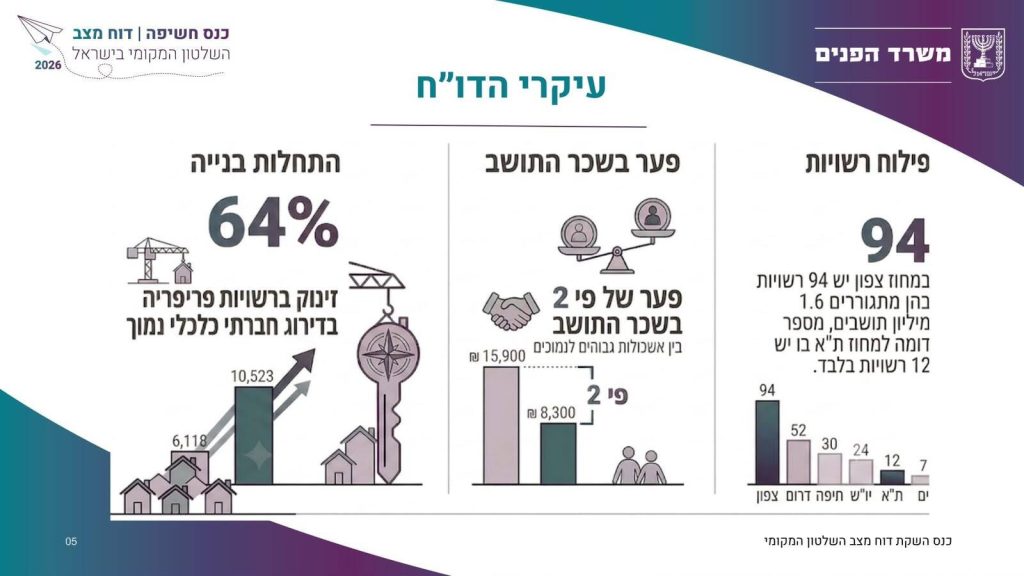
The Tel Aviv District has about 1.5 million residents living in just 12 municipalities, while the Northern District has a similar number of residents, but they are spread across 94 local authorities.
Approximately 651% of local authorities in Israel are located in the periphery.
Approximately 70% of the authorities are in a stable or intermediate financial position, and only approximately 17% are currently in recovery programs.
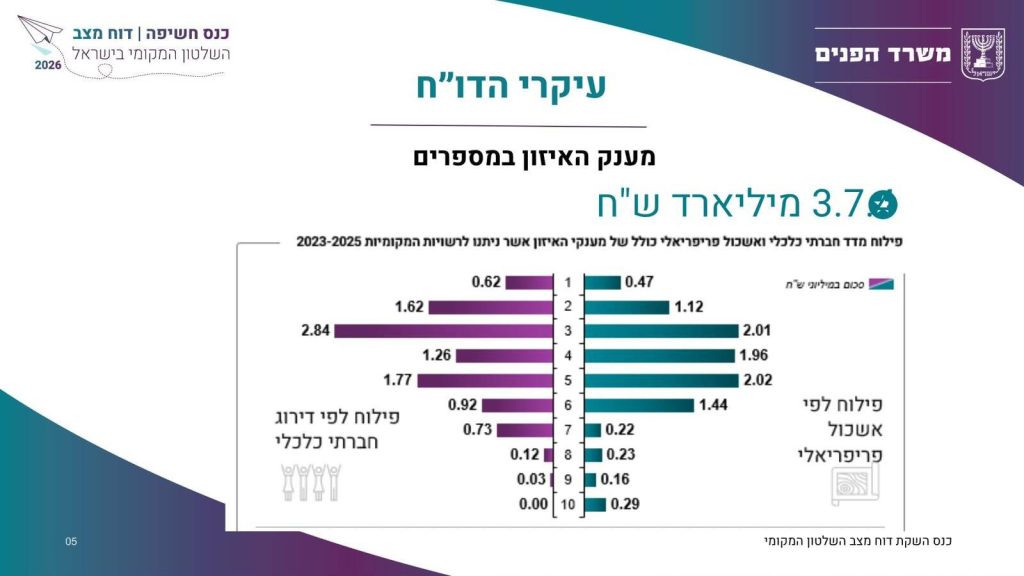
In the area of budgets, the report shows that in 2025, the Ministry of the Interior transferred balancing grants of a record amount of approximately 3.74 billion shekels to 195 local authorities.
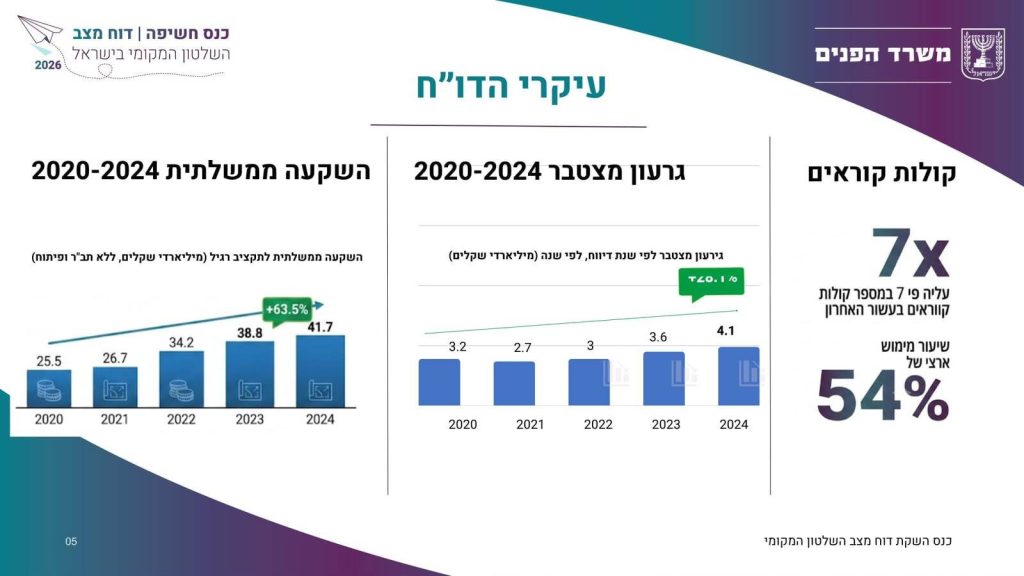
At the same time, the number of government 'calls' intended for local authorities has increased sevenfold in recent years, alongside the expansion of government development budgets.
The report also points to significant trends in the area of human capital. Alongside challenges in staffing key positions in certain authorities, there is increasing investment in developing the future generation of local government, with women now making up the majority in reserve and development programs for young managers.
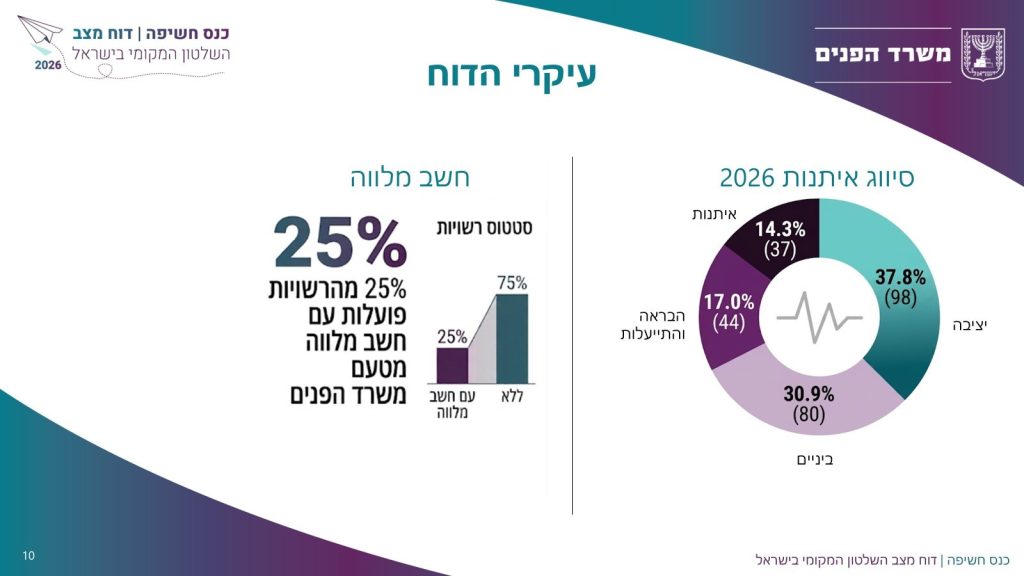
In the field of innovation, the report states that the main challenge for local authorities is not technological, but organizational - implementing innovation requires a change in management culture and data-based decision-making.
It also appears that many authorities are already operating within the framework of regional clusters, which enable cooperation in the areas of transportation, energy, environmental quality, and regional development.
Alongside the report, the Ministry of the Interior also launched an interactive data system, which allows the public to make comparisons between authorities, examine hundreds of indicators, and obtain an up-to-date and accessible snapshot of every local authority in Israel.
The Director General of the Ministry of Interior, Israel Ozan, said"The Local Government Status Report is a significant step in strengthening transparency and promoting data-based decision-making. For the first time, the public has access to a broad and professional picture of the local government in Israel. Our goal is to make the report a regular annual publication, which will help the government, local authorities and the public understand trends, plan better and strengthen service to residents."“