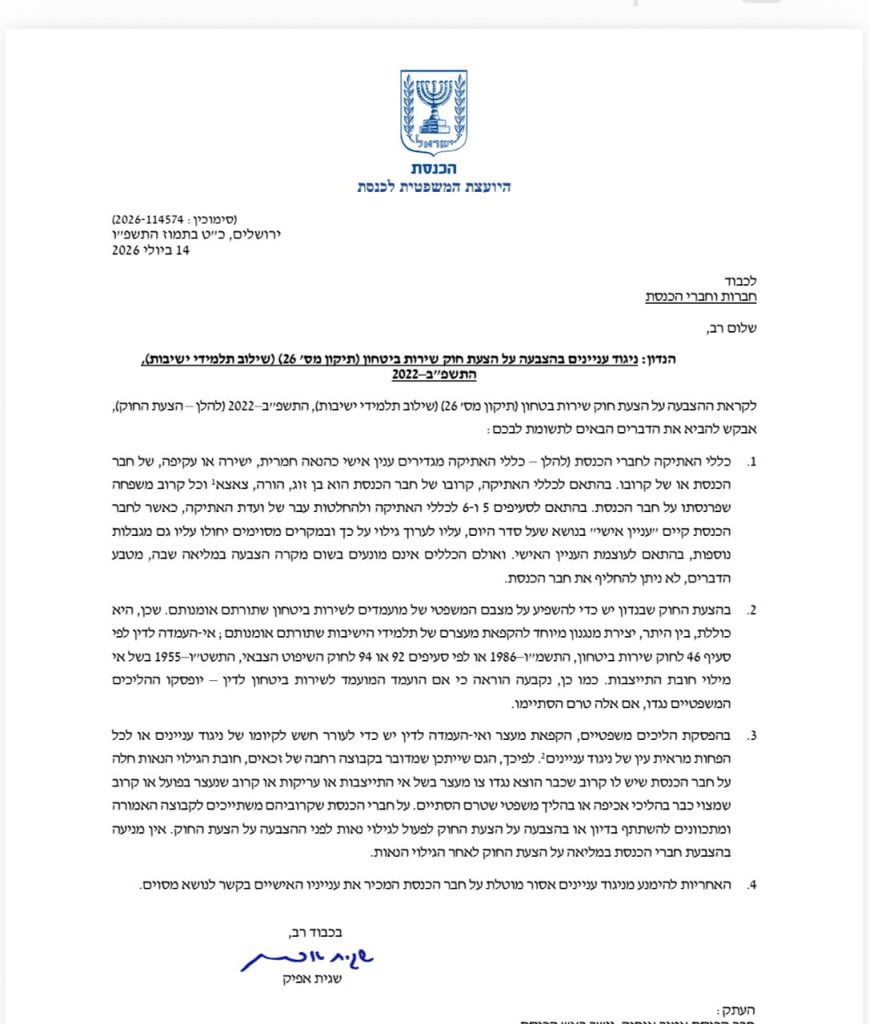
Ahead of the expected vote in the Knesset plenum on the law freezing arrests of Torah scholars: Knesset Counselor, Attorney Sagit Afik, wrote a letter today (Tuesday) to Knesset members from the Haredi factions, asking them to provide 'due disclosure.'.
In her letter, Afik clarifies that the Knesset's ethics rules require a Knesset member who has a "personal interest" in the issue under discussion to make a proper disclosure.
According to her, in the case of the current bill, the obligation applies to Knesset members who have a spouse, parent, child, grandchild, or relative who is dependent on them, if that relative has already had an arrest warrant issued against him for failure to report for service or desertion, has actually been arrested, or is in enforcement proceedings or in a legal proceeding that has not yet been concluded.
Afik explains that the bill includes a special mechanism to freeze the arrest of yeshiva students whose Torah is their art, not to prosecute them for failing to fulfill the obligation to appear, as well as a provision according to which if an indictment has already been filed, the legal proceedings will be suspended until they are concluded.
According to her, these arrangements may have a direct impact on the legal status of those family members.
Because of this, freezing arrest and not prosecuting "is likely to raise concerns about the existence of a conflict of interest or at least the appearance of a conflict of interest.".
Therefore, Knesset members who have a relative who is part of the aforementioned group and intend to participate in the discussion or vote are required to make due disclosure before voting.
However, it emphasizes that there is no impediment for Knesset members to vote in the plenum after due disclosure has been made. It is further clarified that the mere fact that a Knesset member has a relative who is a yeshiva student does not require due disclosure, as long as that relative is not already involved in enforcement or legal proceedings.
At the end of the letter, Afik mentions that the responsibility to avoid a prohibited conflict of interest lies with each Knesset member, in accordance with his familiarity with his personal affairs in connection with the issue at hand.
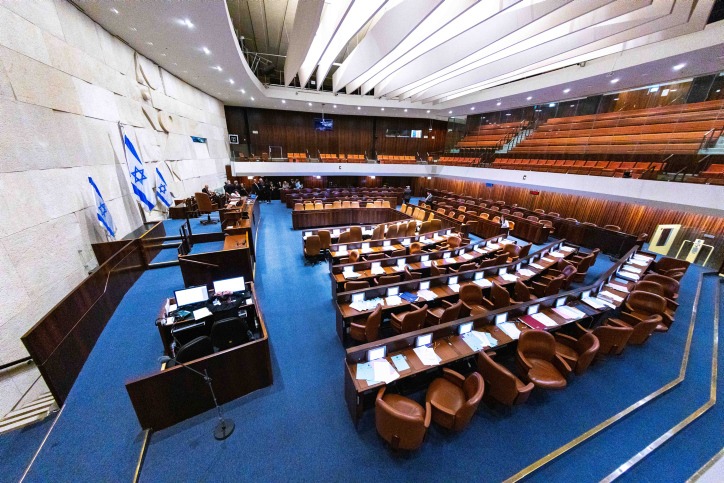
The Knesset will vote this afternoon on the law to freeze the arrest of Torah study defectors in second and third reading, despite the opposition of the Knesset's legal counsel and Chief of Staff Eyal Zamir.