
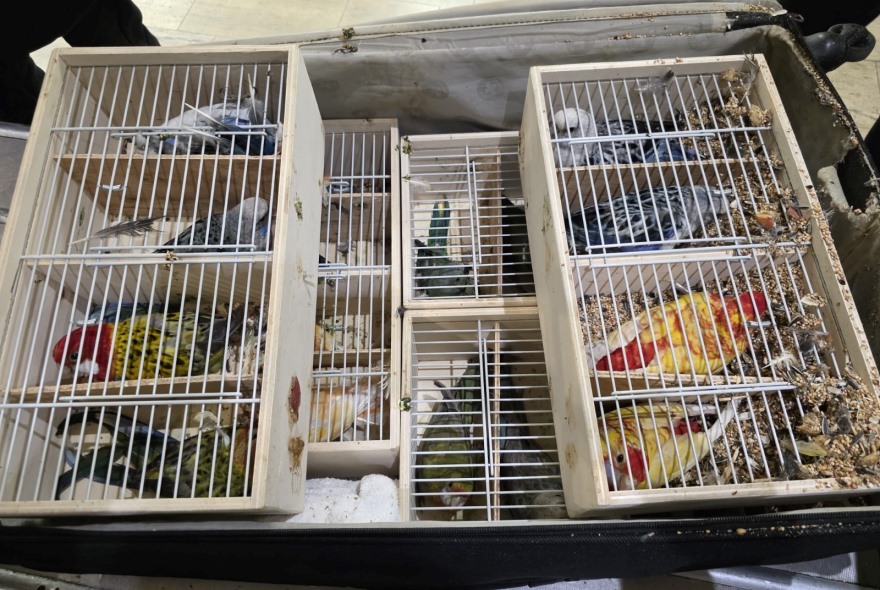
Customs inspectors at Ben Gurion Airport, in cooperation with veterinary services inspectors at the Ministry of Agriculture and Food Safety and the Nature and Parks Authority, thwarted an attempt to smuggle about 20 special breed parrots from Poland that were discovered in 5 different cages.
The value of the parrots is estimated at tens of thousands of shekels.
Criminal proceedings were initiated against the suspect and the birds were returned to their country of origin, after receiving veterinary treatment.
The suspect, an Israeli citizen in his 20s who had returned from a trip to Poland, attempted to pass with his luggage through the green lane in the passenger hall at Ben Gurion Airport, through which passage constitutes a declaration that the passenger does not have goods that require a customs declaration.
The customs inspector approached the passenger and asked him to place his luggage on the conveyor belt of the mirror where the birds were seen. The passenger's luggage was taken for a physical inspection, during which 20 parrots were found packed in difficult conditions.
Upon discovery of the parrots, veterinary service inspectors were called to the scene, examined the animals' health status, and transferred them from customs workers in the passenger hall for further veterinary treatment.
After completing the necessary tests and treatment, the birds were returned to their countries of origin. The suspect was detained for questioning, and criminal proceedings were opened against him.
The investigation is being conducted by the Central Enforcement and Investigations Unit (CEI) at the Ministry of Agriculture and Food Security.
Dr. Shlomo Grazi, Chief Veterinarian for Animal Import and Export at the Veterinary Services: "Smuggling animals is not only a violation of the law, but also a serious violation of animal welfare and a real risk to public health. Animals smuggled into Israel are often kept in difficult and inappropriate conditions, without veterinary supervision and causing unnecessary suffering. In addition, they do not undergo the required veterinary examinations and supervision and may carry diseases that do not exist in the country. The Veterinary Services at the Ministry of Agriculture and Food Security work in collaboration with all enforcement agencies to prevent the entry of these risks into Israel, protect animal welfare and ensure the health of animals and the public.".
Ben Rosenberg, Director of the Wildlife Protection Division at the Israel Nature and Parks Authority: "In the offenses of smuggling wild animals, there are violations of many laws. The cooperation between the state's branches, including: Customs, the Ministry of Agriculture, the Israel Wildlife Service and others, will help prevent harm to wild animals, the introduction of parasites and zoonotic diseases, species that may constitute invasive species and harm local nature and cause great damage to agriculture, along with customs offenses and money laundering and, of course, animal cruelty. The quick work of customs succeeded in preventing the birds from entering the country and returning them to Europe.".