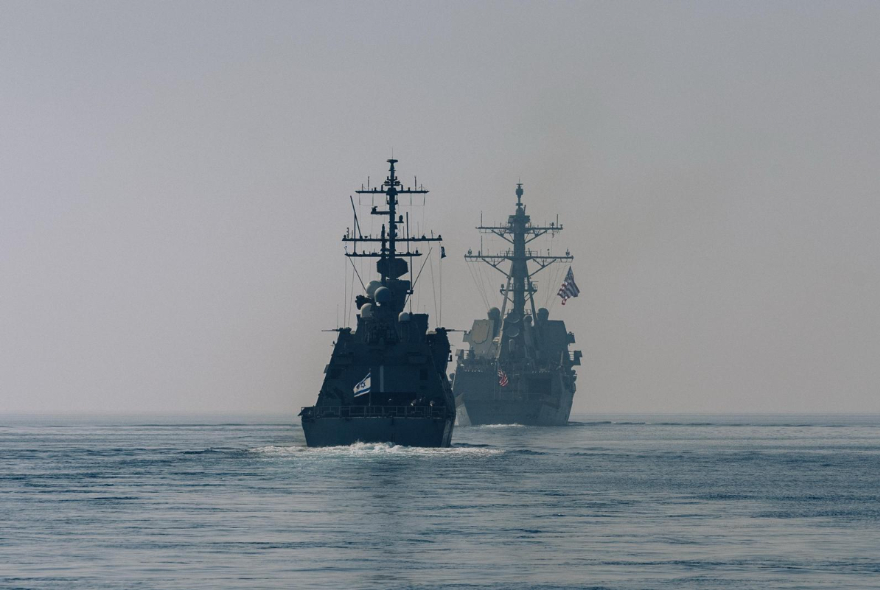
The exchange of fire between Iran and the United States continues: During the Sabbath, several Iranian missiles were launched towards Bahrain, Kuwait, and four ships crossed the Strait of Hormuz, claiming that they "did not receive permission from Tehran" - and the US returned fire.
According to the Americans, the US intercepted four Iranian drones that were launched towards the Persian Gulf, and later also attacked several radar posts in the Goruk area and on Qasem Island.
In addition, the US announced that seven ballistic missiles were intercepted over Bahrain and Kuwait. The US denied that the Fifth Fleet base in Bahrain was hit.
At the same time, the streets of Iran are not quiet again: During the Sabbath, student protests began in several cities across the country, such as Tehran, Isfahan, Mashhad, Shiraz, Tabriz, and in several other locations.
The protests began due to an internal Iranian pedagogical issue - a protest against changes to exam conditions - but it is possible that, as happened in the protests that began about six months ago, this is another attempt by protesters to overthrow the terrorist regime.
On Friday, senior regime officials in Tehran announced that the ceasefire will not become complete and the war will not end unless a complete ceasefire agreement is signed in Lebanon as well, which would include a complete Israeli withdrawal from all areas south of the Litani.
According to the Reuters news agency report, Iran makes it clear that it will not allow any separation between the various arenas, and that it sees Lebanon as a necessary threshold condition for any future calm in the Middle East.