Israel secretly deployed elite units to Azerbaijan during the war with Iran, as part of a network of secret sites across the Middle East designed to facilitate operations against Iran.
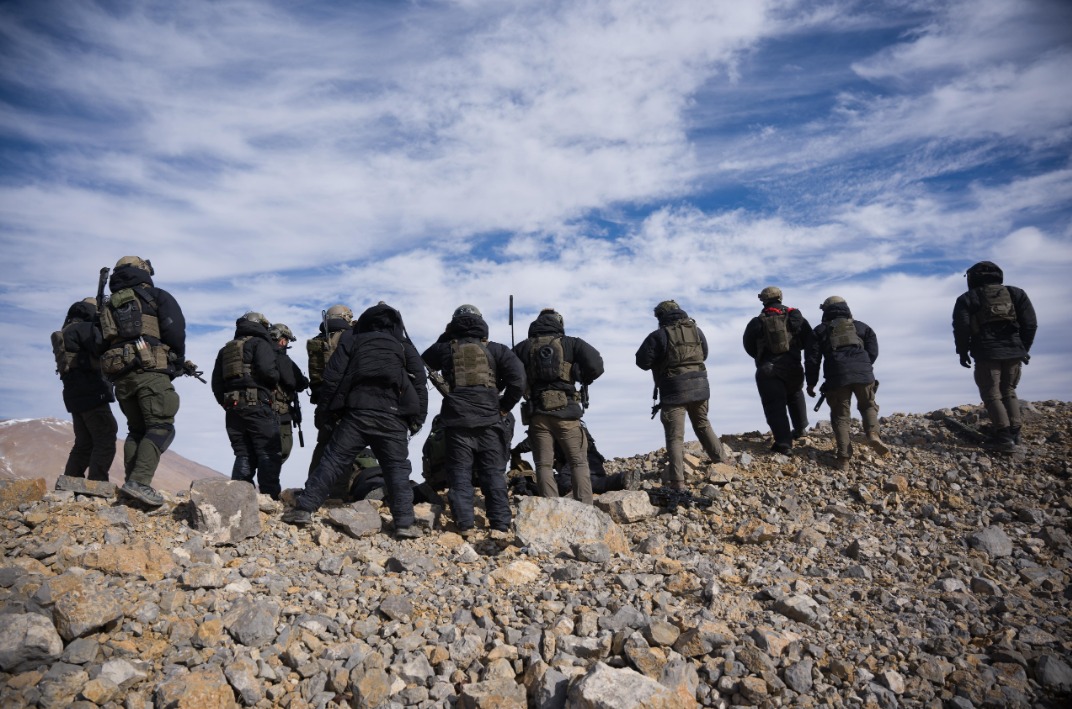
According to an investigation published today (Friday) by CNN, from four sources who were described as "informed", the units included dozens of commando fighters, members of the 669th Air Force airborne rescue unit, and secret Mossad agents, who during the war ran a network of forward posts in southern Azerbaijan - from where they operated drones and conducted complex espionage missions.
Two of the sources noted that the forces operated from several locations in southern Azerbaijan, near Iran's northern border, which at their closest point are only about 96 km from the Iranian city of Tabriz - which Israel also attacked during the war.
The two other sources said that special commando units were also deployed in the area and carried out intelligence-gathering missions and operated drones, which gave Israel a valuable observation point into northern Iran during the war.
According to the CNN investigation, the covert presence in Azerbaijan was just one arm within a network of secret bases and facilities that Israel deployed throughout the Middle East and the Horn of Africa - including in Iraq, the United Arab Emirates, and Somaliland.
This network gave the IDF unprecedented accessibility and an extended operational range of hundreds of kilometers deep into Iranian territory, which made it possible to carry out repeated waves of attacks.
The forces, initially designed as emergency rescue teams, expanded in scope and became military and intelligence-gathering positions.
According to one source, a military post was established in Somaliland, which serves as a stopover point for Israeli aircraft on long-haul flights to Iran. This post was established just a few months after Israel recognized Somaliland and established relations between the two countries.
At the same time, according to reports, the IDF also maintained two secret facilities in Iraqi territory during some of the months of the war. These bases, whose existence was first reported in the Wall Street Journal and the New York Times, provided Israeli forces with forward positions for logistical support and readiness for pilot rescue and rescue operations if necessary.
The night operation
According to the CNN report, the infrastructure for the operation in Azerbaijan began weeks before the opening salvos of the war. In mid-January, as the ayatollah regime was bloodily suppressing huge demonstrations in the country, Israel planned a covert infiltration operation along the Azerbaijani-Iranian border to plant listening devices and advanced spying equipment.
The original plan was to carry out the operation under the auspices of a joint military strike with the United States. However, President Trump canceled the strikes at the last minute, after Tehran sent messages that it would stop killing protesters.
But Israel refused to wait. Believing that diplomatic talks were doomed to failure, it was decided to act alone: Air Force stealth aircraft and special forces were scrambled for the mission, and intelligence equipment was successfully installed in the border area.
As a result, the site became the central source of information that provided Israel with early warnings of missile launches and tracking Iranian military movements.
The dramatic elimination
The forward base in Azerbaijan not only served as 'eyes and ears', but quickly became a platform from which assassination operations were carried out.
According to the investigation, one of the key operations made possible by the Azeri axis was the assassination on March 4 of Rahman Moghadam, head of the intelligence department of the Islamic Revolutionary Guard Corps. Moghadam was identified by Israel as the person behind the planning of the assassination attempt on Donald Trump in 2024.
The Iranian response was not long in coming. Just a day after the assassination, drones attacked an airport in the Azerbaijani enclave of Nakhchivan, damaging the terminal building and injuring several people. Azerbaijani President Ilham Aliyev was quick to blame Tehran, calling the attack "an ugly, cowardly and shameless act of terrorism," while Iran denied any connection to the incident.
Two days later, on March 6, Azerbaijan's State Security Service announced that it had foiled a plot by the Revolutionary Guards to attack critical infrastructure and Israeli and Jewish targets in the country – a joint operation by the Mossad, the Shin Bet, and the IDF, which Israel officially confirmed a few weeks later.
The Azerbaijani Embassy in the United States strongly rejected the findings of the investigation and told CNN that it firmly denies baseless allegations about the use of its territory against third countries.
Neither the Prime Minister's Office nor the IDF spokesperson responded to the findings of CNN's investigation.