
In recent decades, the IDF has been promoting the opening of all combat units to women - following pressure from the High Court of Justice, feminist organizations, and research institutes.
Only recently was it announced about the first female soldier who completed the Sayeret Matkal route.
However, IDF data received by the organization 'Voters in the Family' indicates that this process has a significant and measurable cost with regard to the reserve force - which is the backbone of the IDF in times of emergency.
According to data provided by the IDF Freedom of Information Commissioner, the rate of female combatants in regular service has consistently increased from 51% in 2013 to 211% in 2025. In contrast, in the reserve force, the picture is completely different: in 2025, the rate of female combatants is only about 101% of the total population of combatants in the reserves. Only about half of the increase in the number of female combatants in the regular force ultimately translates into an active reserve force.
The meaning: The more resources the IDF invests in increasing the number of female fighters in compulsory service, the greater part of the investment does not reach the reserve system on which the army relies in times of war.
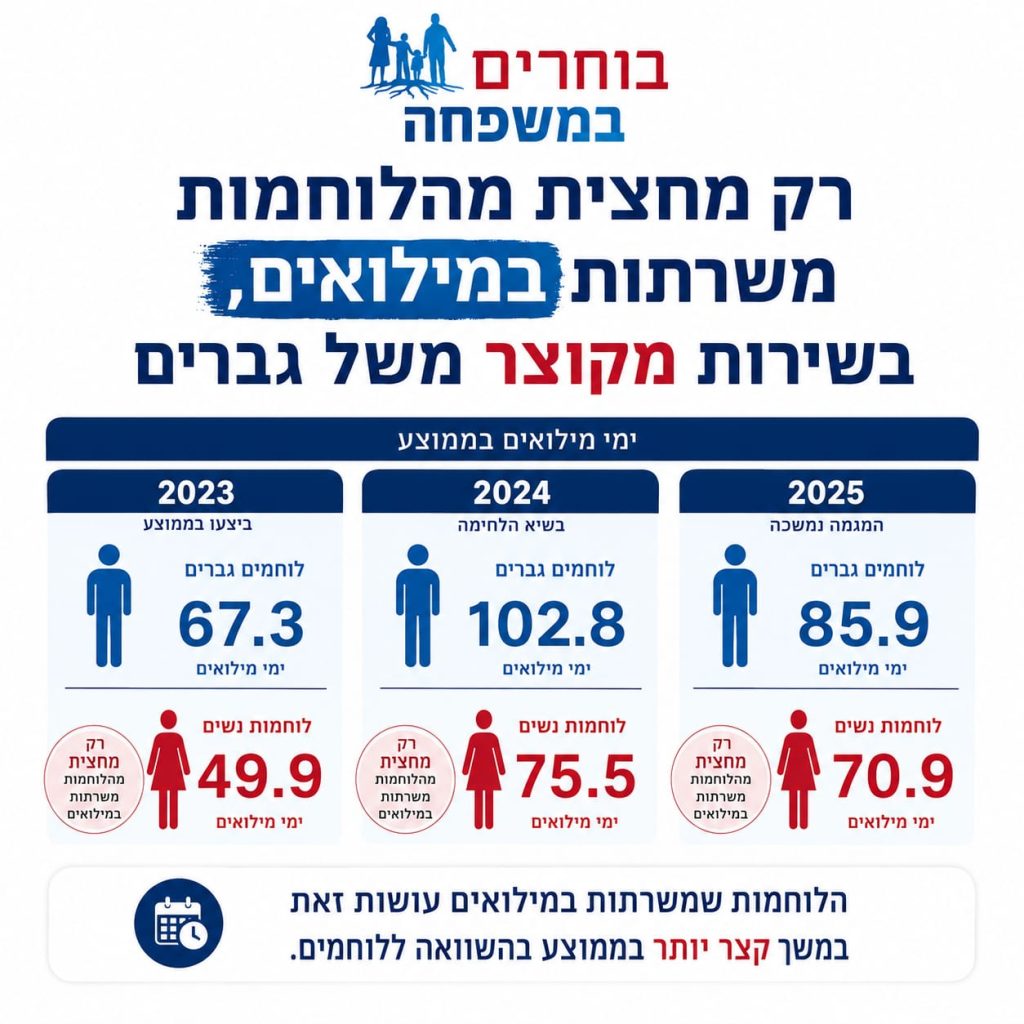
Even among the female fighters actually serving in the reserve force, there is a significant and long-standing gap in the scope of service and reserve days recorded over the years, and especially in the recent years of fighting:
In 2023, male soldiers served an average of 67.3 days in reserve, compared to only 49.9 days for female soldiers.
In 2024: At the height of the fighting, the gap widened when male soldiers served an average of 102.8 days, compared to 75.5 days for female soldiers.
In 2025: The trend continued with an average of approximately 85.9 reserve days for male soldiers, compared to approximately 70.9 days for female soldiers.
'Voters in the Family' emphasizes that these data are partial, as the IDF does not publish additional essential data for a true examination of the policy, such as: the cost of training female fighters compared to male fighters, injury and attrition rates of female fighters, dropout rates, operational competence over time, and the cumulative impact on the reserve force. Without this data, it is impossible to conduct a serious and professional cost-benefit test.
In addition, over the years, the definition of "combat roles" has been greatly expanded, so that part of the increase in the number of female fighters stems from bureaucratic definitional changes and not necessarily from a parallel increase in the most available and effective fighting force on the front.
Michael Foa, chairman of 'Voters in the Family' who led the appeal to receive the data from the army, said in response: "The sanctity of the camp, the cohesion of the unit and a strong reserve force are not an obstacle to victory - they are part of the conditions for victory. Before continuing to open more and more combat units for women, it is appropriate to present the public with a full cost-benefit test and examine whether the move strengthens the IDF or weakens its power in the long term.".