
The CBS investigative program '60 Minutes' revealed for the first time details and classified documents on one of the most daring rescue operations in the history of the United States military - the rescue of two American aircrew members whose F-15E jet was shot down in Iran in April.
Want to hold a 'captive redemption' in the most elegant way? Only with 'Yad L'Achim' • Mekdem
Alongside the recordings, the plane's weapons systems officer, who was given the operational nickname "Bravo" for security reasons, was interviewed for the first time and relived the moments of terror after the impact over the Isfahan area.
The footage released reveals the moments of Bravo's rescue. The video shows members of the United States Combined Special Operations Command during the operation to locate and rescue him, after he survived for two days alone and seriously wounded deep in enemy territory.
""Bravo" was damaged during the downing of the plane in southwestern Iran, in the Isfahan region. An Iranian missile that hit the plane also damaged its parachute equipment, and it plummeted to the ground at extremely high speed. "I looked up and saw that I was without a parachute. It was the scariest thing I've ever seen, I started praying," he told the investigative program '60 Minutes.'.
According to professional estimates, "Bravo" hit the ground at a speed of between 110 and 160 km/h. He survived the fall but suffered a fractured spine, fractures in his shoulder and arm, and a sprained ankle.
On the investigative program '60 Minutes' he said: "It is a modern miracle and proof of divine providence that I survived without fatal injury.".
Despite his condition and without food or water, the officer began moving in the terrain and climbing towards a mountain ridge that reached a height of about 2,100 meters, in an attempt to find shelter. "I said to myself - 'No lack of motivation will make you get to Iranian television,'" he explained.
The two crew members who were forced to abandon the plane landed about five miles apart. The pilot, nicknamed "Alpha," was located and rescued within about six hours in a daylight operation involving 21 aircraft under heavy fire, while the rescue of "Bravo" was delayed by 24 hours due to operational considerations.
The breakthrough came after classified CIA technology helped pinpoint his precise location, along with activating his personal tracking device. After the location was verified, a massive rescue force was launched, including hundreds of fighters, dozens of fighter jets and helicopters.
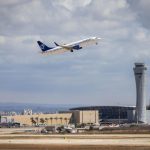
As part of the operation, two transport planes carrying about 92 special forces commandos landed on Iranian soil. This was the first American ground operation in the country in about 46 years.
The rescue itself took place under fire, as the commandos fought against members of the Revolutionary Guards and the Basij, while fighter jets operated to isolate the area of operation and prevent the arrival of Iranian reinforcements. During the operation, two American helicopters were hit by anti-aircraft fire, and an A-10 support aircraft crashed in Kuwaiti territory.
Even after Bravo was located, the American force had to deal with another complication. The wheels of the two transport planes sank into the sand on the makeshift landing strip, preventing them from taking off.
A secret US Air Force unit was called in to assist and three additional planes were sent to evacuate the fighters and the rescued officer.
The two planes left behind were destroyed by bombing on the orders of the operation commanders, to prevent the technology they contained from falling into Iranian hands.