
A new Israeli study that examined whether honeybees are able to assess the reliability of information transmitted in the 'Waggle Dance' - with the help of which bees direct other workers to food sources - found that honeybees are able to assess the reliability of the information they disseminate, change the intensity of communication according to the quality of the information, and strengthen the distribution of reliable information within the hive.
The team of researchers, Prof. Sharon Shapir and Dr. Carmi Oxman from the Trivax Center for Bee Research at the Faculty of Agriculture, Food and Environment at the Hebrew University and Prof. Ofer Feinerman from the Department of Physics of Complex Systems at the Weizmann Institute, examined whether a bee that provides reliable information will increase its recruitment efforts, compared to a bee whose information is misleading or unverifiable, with the aim of understanding how social communication in a bee colony is affected by the quality of the information: Do bees distinguish between reliable and misleading information? Will a bee that is "confident" in the reliability of its information invest more in dancing? And do the following bees change their behavior according to the reliability of the dancing bee "the focal point", which transmits the information?
The researchers created three situations for the 'focus' (dancer) bee:
Reliable (Honest) - Bees that followed the dance and reached the feeder did find food.
misleading (Liar) - The dancing bee received food, but the other bees that followed her found an empty feeder.
Unverifiable (Unverified) - Bees that arrived at the feeder were trapped and could not return to the hive, so no feedback was generated regarding the quality of the information.
The main finding of the study was that 'trustworthy' bees increased their recruitment effort and expanded the number of dance circles they performed, meaning they danced longer, produced a stronger signal, and exposed more bees to their information.
The researchers suggest that this is an expression of 'confidence sharing': when a bee receives reinforcement that its information is reliable, it increases the strength of the signal it transmits.
Among 'deceptive' bees, no significant change in dance intensity was found over time; the bees did not increase the number of circles.
The researchers suggest that the bee experienced a contradiction: on the one hand, it found food itself, but on the other hand, the lack of positive feedback from the recruits reduced its 'confidence' in the signal.
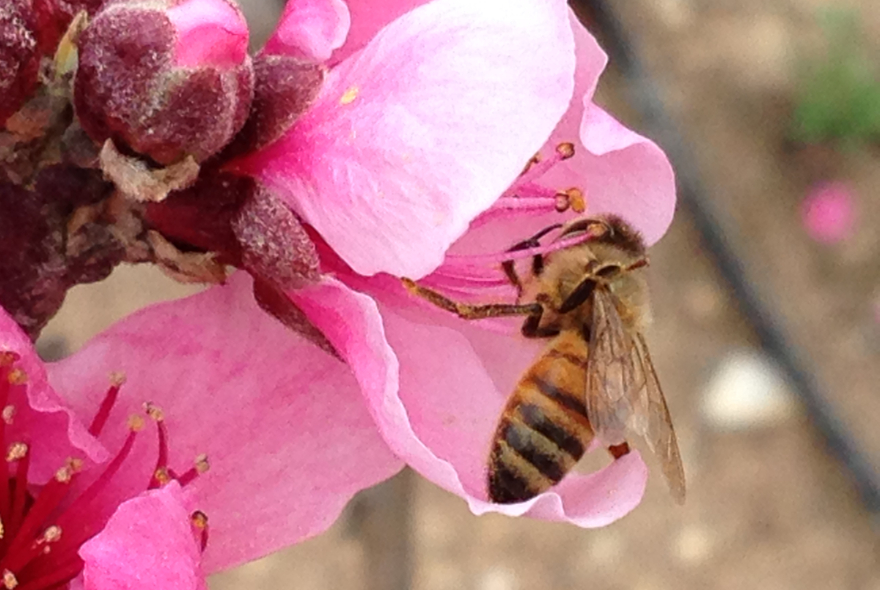
Photo: Yosef Engel
The bees without feedback gradually reduced their recruitment efforts and the number of dance circles, meaning that in the absence of social reinforcement, the signal they transmit weakened, suggesting that not only negative information is influential, but also the lack of positive feedback.
The study also found that the following bees followed the same small number of dance circles in all three conditions, thus making room for more bees to follow the dance. Thus, dancers who danced longer were able to recruit more followers.
However, in the test phase, the bees followed more circles overall, possibly because the information was more difficult or less certain. In addition, the researchers tested whether the availability of nectar unloaders in the hive, which is influenced by the abundance of resources in the environment, affected the results and found no differences between treatments in the time it took to unload nectar. That is, the changes in dance were due to the quality of information and social feedback - and not to general changes in the state of the hive or the environment.
The researchers suggest that this is an important collective mechanism: reliable information receives social 'amplification', uncertain information is attenuated, and thus the hive maintains an efficient flow of information.
Additionally, the study raises the intriguing possibility of a basic form of uncertainty monitoring, or even elements of 'metacognition' in bees.
The research, which connects social communication, information reliability, and collective decision-making, offers a natural mechanism for information quality control, and contributes to the understanding of the 'collective intelligence' of honeybees.
CEO of the Pollination and Honey Council, Gil Shatzberg: "The senses and abilities of the honey bee continue to amaze researchers around the world. This important study explains the bees' high ability to assess the reliability of the information they disseminate. As in the world, research in Israel has expanded in the field of honey bees that pollinate about 80% of agricultural crops with the aim of protecting them and at the same time optimizing the pollination activity they provide.
""I expect that the results of the studies will lead to finding ways to better deal with the worrying phenomenon of their disappearance, which is caused, among other things, by real threats from the climate crisis, global warming, and accelerated urbanization.".
From the Pollination and Honey Council data: Today in Israel there are hundreds of beekeepers who care for tens of thousands of hives scattered in thousands of protected grazing areas throughout the country, with approximately 100,000 hives pollinating agricultural crops of fruits and vegetables.
In Israel, the honey bee contributes approximately 3.5 billion shekels per year to Israel's agricultural GDP through crop pollination.