

The Chief Rabbinate of Israel approved a precedent-setting decision this week that sets a minimum and maximum threshold for the amount of the ketubah recorded in marriage ceremonies in Israel.
According to the decision, which was made at the council meeting on Tuesday, Elul 5775, the amount of the ketubah will not be less than 36,000 shekels and will not exceed 360,000 shekels.
The decision was made following cases in which particularly high ketubah amounts created significant difficulties and complicated divorce proceedings.
The decision is based on the work of the Dayanim Committee, which includes Rishon LeZion Rabbi David Yosef, President of the Great Rabbinical Court, Chief Rabbi Rabbi Kalman Meir Bar, President of the Chief Rabbinate Council, Chief Rabbinate Council member Rabbi Yaakov Shapira, Chairman of the Marriage Committee, and Dayanim of the Great Rabbinical Court Rabbi Avraham Schindler, Rabbi Meir Freeman, Rabbi David Bardugo, Rabbi Zion Luz, and Rabbi Avraham Shloush.
Rabbi David Yosef initiated the establishment of the committee to set the threshold, against the backdrop of long-standing discussions in the rabbinical courts surrounding the phenomenon of excessive ketubahs - cases in which grooms-in-law write extremely high amounts in the ketubah, which they have no realistic ability to meet.
This issue has occupied halachic arbiters over the years with the question of "conclusion" - whether a financial obligation that is not backed by a real ability to be fulfilled is considered a valid halachic obligation, and what are the practical implications of such writings when the day comes, God forbid, to be realized in court.
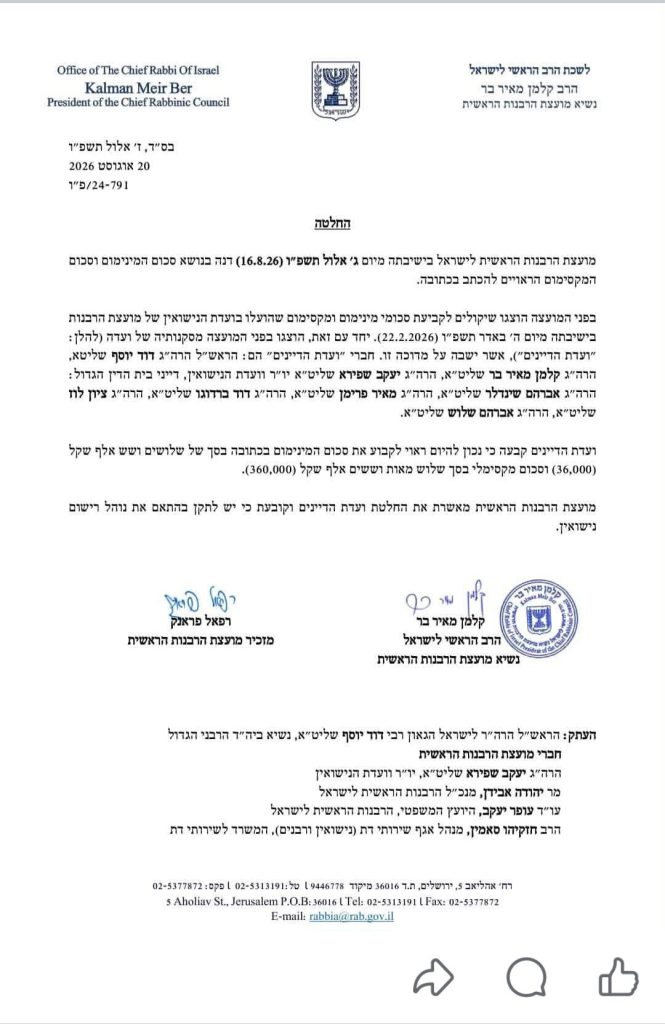
Rabbi Kalman Meir Bar: "A situation has been created in which grooms-in-law commit to imaginary sums in the ketubah, which it is clear from the outset that they have no intention or ability to meet, thereby harming the very halakhic meaning of the document. At the same time, the matter cannot be left completely open-ended without any defined minimum, since the ketubah is intended to provide the woman with real financial security. The determination of a lower and upper limit is intended to return the ketubah to its proper place - a meaningful halakhic document, and not an empty declaration of intentions.".