
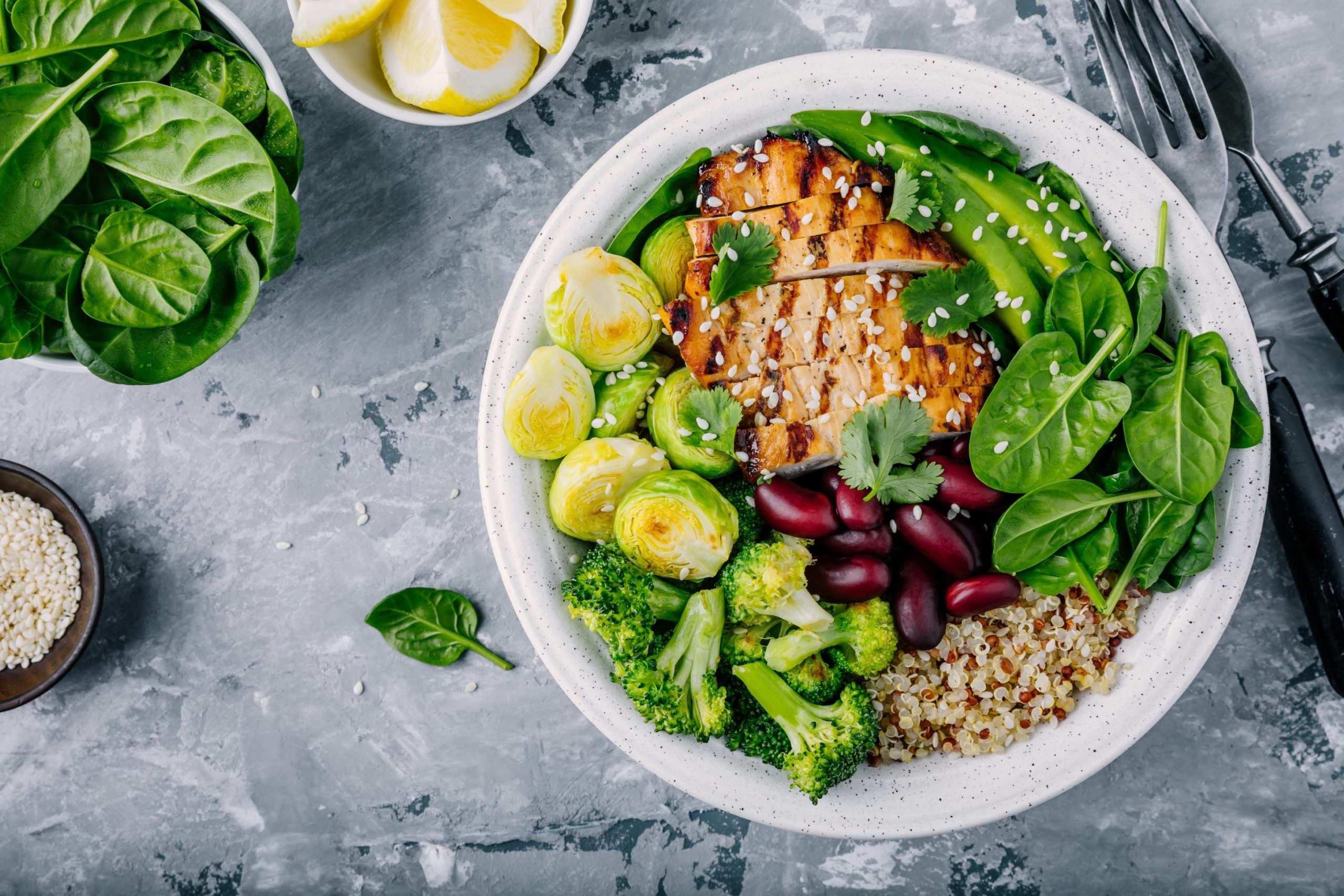
Stress, heat, illness, or medication that reduces appetite can mean that mealtime has arrived, but we're not hungry at all. Sometimes even the mere thought of a full plate can make us feel uneasy.
Veronica Meisler, an NLP clinical dietitian and Herbalife consultant, explains: "There are days when we feel full, busy, tired, or simply impatient to sit down to a proper meal. This can happen during times of stress, on hot summer days, during illness, following hormonal changes, or during treatment with medications that reduce appetite.""
In such situations, it's very easy to tell ourselves: "If I'm not hungry, my body probably doesn't need food." Sometimes the tempting thought even creeps in that "we saved a few more calories without making any effort.".
But physiologically, it is important to distinguish between the feeling of hunger and the body's nutritional needs. Appetite is not a simple fuel gauge that lights up when the stomach is empty. It is influenced by hormones, the nervous system, emotional state, medications, the biological clock and other factors. Therefore, it is certainly possible that the body needs energy, protein, fluids or vitamins - and yet we do not experience the desire to eat.
The stomach may feel full, but during the day we did not consume enough protein, drank too little, or did not provide the body with the energy it needs to maintain concentration, vitality, and muscle mass.
We don't have to force ourselves to eat.
"The way we talk to ourselves also has an impact on our behavior," adds Meisler. "The sentence 'I have to eat a proper meal' is not just a description of a task, but an entire frame of mind. The brain immediately creates an image of a large plate, time that needs to be cleared, effort, and even a sense of a task that must be completed. When we are already full, tired, or have no appetite, this framing is objectionable even before the food is placed in front of us.
""In contrast, a question like 'What is the smallest, most nutritious thing I can give my body right now?' opens up new directions of thinking. Instead of getting stuck in the struggle between 'I have to eat' and 'I don't feel like it,' we direct our brain to seek a more flexible and realistic solution. Sometimes it's enough to replace the definition of 'meal' with 'small food unit' - a few bites or sips that provide the body with significant nutritional value. Simply changing your perspective can turn eating from a burdensome task into a small, doable step.".
On days when your appetite is low, it's a good idea to stop relying solely on the question "Am I hungry?" and add a few more questions: How many hours ago did I last eat? What sources of protein did I eat today? How much water have I drunk so far? What signs is my body currently giving me in terms of energy level, concentration, feeling weak, headache, or irritability?
The goal is not to eat contrary to the body, but to understand that it "speaks" to us in several languages simultaneously - and to learn to listen carefully to all the signals it sends.
Hunger is one of these languages, but not the only one. Sometimes the body signals its need for nourishment through fatigue, decreased concentration, irritability, slow recovery, or a feeling of weakness. Truly listening to the body means paying attention to the full range of signals it sends, not just the presence or absence of appetite.
When there's only room for a few bites, start with protein.
When there is only room for a few bites, it is important to think not only about quantity, but also about priorities. It can be likened to packing a small suitcase: when space is limited, it is better to pack first what will be difficult to complete later. Similarly, if the small volume of food that the stomach is ready to accept is “occupied” at the beginning by carbohydrates, we may feel full, but still have difficulty reaching a sufficient amount of protein later in the day. Therefore, it is usually better to start with a protein source, and only then add the rest of the meal components according to how the body feels.
You don't have to make a complex meal. A cup of protein-rich yogurt, cottage cheese, a hard-boiled egg, edamame, or a few falafel balls can all be a great solution. Even if it's not a "complete meal," it can definitely be a good nutritional unit.
Sometimes it's easier to drink than to eat.
When you don't feel like chewing, a liquid meal can be a more convenient solution. A smoothie based on yogurt, milk, or soy drink, along with fruit, a little oatmeal, and nuts, can provide an excellent combination of protein, carbohydrates, and fat. Another option is a smoothie based on a powder for making a protein drink, which allows you to get a relatively concentrated dose of protein and nutrients even in a small volume and with a texture that is easy and pleasant to drink.
However, it's important to remember that not every drink is a meal. Coffee, juice, or a sugary drink may create a temporary feeling of fullness, but they don't provide the body with the nutrients it really needs.
Meisler Emphasizes: "Ultimately, healthy eating doesn't always have to look like a plate arranged around a table. Sometimes it can be a cup, a small bowl, or a few bites eaten between tasks. The trick is not to fight the body, but also not to rely solely on the feeling of hunger. Especially on days when the appetite disappears, it is important to learn to listen to the other signals it sends - and find the simplest way to nourish it.""