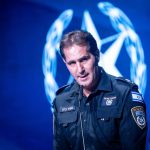
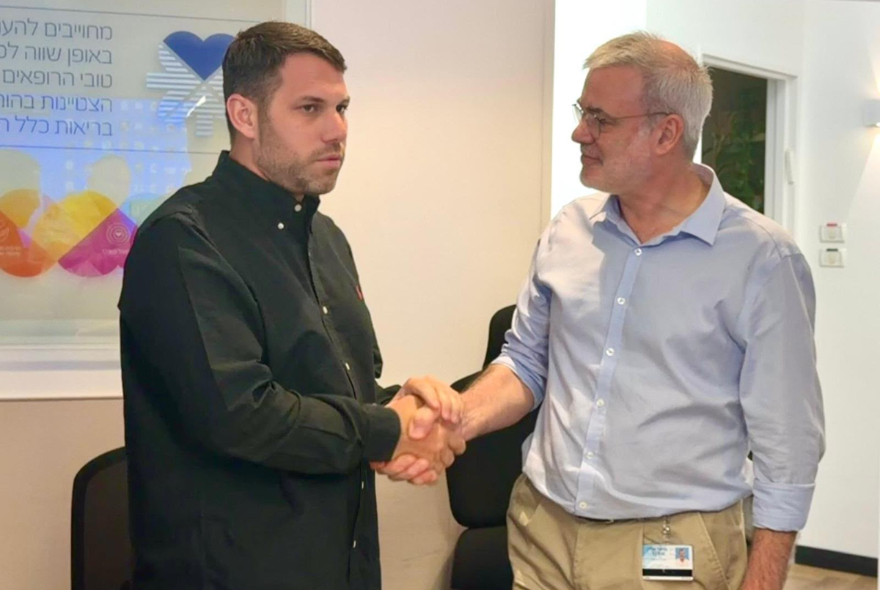
The Director General of the Ministry of Transportation and Road Safety, Moshe Ben Zaken, held a working meeting with the Director General of the Tel Aviv Ichilov Medical Center, Prof. Eli Sferkar, and the Director General of the National Transportation Authority, Itamar Ben Meir, with the aim of promoting an efficient, accessible and convenient connection of the hospital to the public transportation system.
The CEO noted that it is the policy of Transportation Minister Miri Regev to strengthen transportation connectivity to medical centers and give priority to patients, people with disabilities, and medical teams.
The Ichilov Medical Center currently covers approximately 300,000 square meters of built-up area and is undergoing significant expansion.
According to the medical center's CEO, Prof. Eli Spercher, within three years the hospital is expected to add about 400 beds and double its area. At the same time, the center is training about 11,000 students and professionals, among other things to fill the positions that will be required as part of the expansion.
Every year, Ichilov treats approximately two million people. Including the attendants, medical staff, students, employees and suppliers, approximately ten million people enter the medical center's gates annually.
The meeting also presented the center's future expansion plans, including the construction of a 24-story tower that will include a proton radiation center for treating tumors, including brain tumors in children. The tower is expected to open in 2028, and the Director General of the Ministry of Transportation emphasized that full transportation accessibility must be ensured, especially given the complex conditions of some of the patients.
NTA CEO Itamar Ben-Meir presented a professional review of the possible engineering alternatives for connecting the medical center to the nearby public transportation stations, including the possibility of breaking through a tunnel or building an accessible bridge. During the discussion, the planning and ownership challenges facing the Ministry of Defense and the Israel Land Authority were also presented.
At the end of the meeting, the Director General of the Ministry of Transportation instructed the professionals to establish a joint team that will formulate a transportation master plan for the Ichilov Medical Center. The team will examine solutions that will facilitate the arrival of patients, companions and medical teams and connect the hospital in an efficient and accessible manner to public transportation systems. It was also determined that regular follow-up meetings will be held to examine the progress of the work.
Minister of Transportation Miri Regev: "Connecting hospitals to the public transportation system is an integral part of the accessibility revolution we are leading. Patients, people with disabilities, their families, and medical teams need to reach the hospital in a comfortable, respectful, and safe manner. Just as we worked to extend the light rail to the entrance of Hadassah Ein Kerem Hospital and just as we are promoting transportation solutions in Sheba, we will also work to formulate the best solution for Ichilov.".
Director General of the Ministry of Transportation, Moshe Ben Zaken: "For a patient dealing with a complex illness, the road to the hospital is beyond a transportation issue and we see this as saving lives. In accordance with the directive of Minister Miri Regev, we will work to formulate an accessible, effective and practical solution that will make it easier for patients, companions and medical teams. This is a mission-driven task, and the patient population is our top priority.".
CEO of Ichilov Medical Center, Prof. Eli Sferkar: "Ichilov is experiencing an unprecedented development momentum and is expected to significantly expand the scope of services it provides to the public. Efficient transportation accessibility is a necessary condition for the continued development of the center and our ability to provide quality medical care to the millions of patients, companions, and staff members who come to us each year.".