
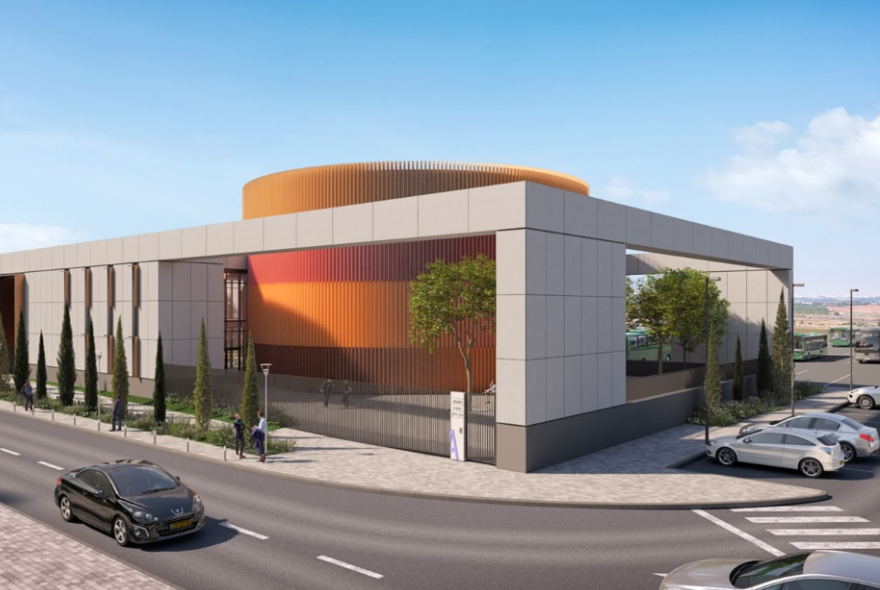
The National Committee for Planning and Construction of National Infrastructures (NCPI) approved today (Monday) the Ministry of Transportation's proposal to establish the Shefayim Traffic Management Center - a new metropolitan traffic management center, which will be managed by the Ayalon Highways Company and will serve as the command and control center for the transportation system in the northern Dan metropolitan area and the Sharon cities.
The Shefayim Metro is a major transportation and technological project promoted by the Ministry of Transportation, through the Ayalon Highways Company, as part of the national move for smart traffic management in metropolitan areas.
The center will enable real-time management of vehicle traffic, public transportation, shuttles, parking lots, traffic lights, and express lanes in the area, while giving priority to public transportation and improving the flow, safety, and reliability of service.
The Metropolitan Traffic Management Center (MTMC) is an advanced control and monitoring center that operates around the clock and enables continuous management of transportation systems in dense urban spaces. The center uses cameras, sensors, real-time traffic data, and smart control systems to monitor congestion, optimize traffic light activity, prioritize public transportation, and provide a rapid response to emergencies, accidents, and traffic disruptions.
Netivei Ayalon currently operates the Dan Traffic Management Center near the Savidor Central Train Station in Tel Aviv. Against the backdrop of the metro work and the need to strengthen the metropolitan area's command and control system, the company is promoting two new traffic management centers: one in Holon, on the territory previously used by the Licensing Office, from which traffic in the heart of the metropolis will be managed; and the second in Shafayim, from which traffic in the cities of Sharon and the northern Dan Bloc will be managed.
The Shefayim Interchange will serve as the technological and operational heart of the integrated transportation complex in Shefayim and the express lanes project in the northern Dan Metropolitan Area. The complex combines a large parking lot, an advanced passenger terminal, an array of electric shuttles, express lanes, and smart control and monitoring systems. The transportation model in the complex is based on the "park and ride" concept: drivers coming from the north will be able to leave their vehicles outside the traffic congestion of the Dan Bloc, and switch to fast, convenient, and efficient public transportation to the main employment centers in Tel Aviv and the center.
The new center will allow for continuous management of traffic flow to and from the complex, scheduling shuttle operations, improving connectivity between modes of transportation, prioritizing public transportation at entrances and exits, and providing a rapid response to exceptional events. In doing so, it will strengthen the reliability of service for passengers, improve the utilization of existing infrastructure, and contribute to reducing congestion on the main entrance routes to the Dan Bloc.
The project fits into the Ministry of Transportation's concept of establishing a network of advanced metropolitan traffic management centers throughout the country, similar to the Dan Traffic Management Center and the Gulf Traffic Management Center. These centers enable a transition from point-based traffic management to comprehensive metropolitan management, based on real-time data, central control, and coordination between all bodies and systems operating in the transportation space.
Minister of Transportation Miri Regev: "Approval of the Shefayim Metro is part of our vision for a stronger, smarter, and more accurate public transportation system. We are moving to real-time traffic management, which allows us to respond quickly, prioritize public transportation, and connect the Sharon towns to the employment centers of the Dan Bloc in a more efficient and convenient way. This is another step in our policy to create a real alternative to the private car for the public, reduce congestion, and improve service for passengers.""