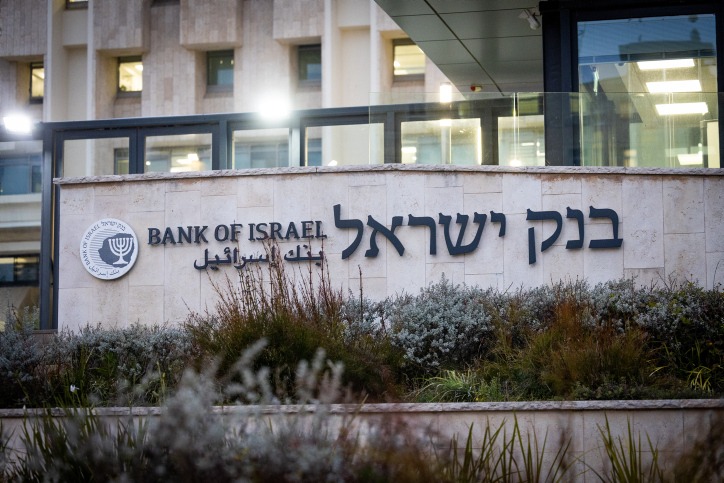
The Bank of Israel announced today (Monday) that it has decided to lower the interest rate in the economy by a quarter of a percentage point, to 3.75%.
Bank officials justified the move by declining inflation and the strengthening of the shekel.
This is the second interest rate cut since the beginning of the year, after a quarter-percentage decrease was recorded in January.
The Bank of Israel was debating whether to lower the current interest rate, after twice in a row leaving it unchanged at 41%/3%.
Finance Minister Bezalel Smotrich responded with disappointment: "The governor's decision to lower the interest rate is too little, too late. The Israeli economy needs a sharper interest rate cut. For our part, as a government, we are managing the state budget responsibly and the impact on the markets is clearly felt.".
""The governor should have cut the interest rate more sharply to make things easier for exporters, households and business owners.".
About two months ago, the Bank of Israel decided to leave the interest rate unchanged at 4%. The bank's monetary committee decided at the time not to lower the interest rate despite the fact that inflation is within the target range set by the bank at 2%, due to the uncertainty following the fighting in Iran and Lebanon and the fear that inflation will rise, among other things, due to the increase in fuel prices.
About three months ago, it was also decided to leave the interest rate unchanged, despite the moderation in inflation but against the backdrop of the tensions that prevailed between the United States and Iran.
Finance Minister Smotrich then attacked Bank of Israel Governor Amir Yaron for the decision: "A wrong decision, which is not supported by the macro data of the Israeli economy. The shekel is strong, inflation is weakening and we are deep within the target range. The main challenge today is the growth challenge and the need is to make things easier for Israeli citizens, households, mortgage holders and small and medium-sized businesses. Credit is strangling the economy and delaying recovery.".