
Prof. Nir Peled, Director of the Helmsley Center at Shaarei Tzedek: "This is a truly historic turning point. There has been no significant change in treatment options and outcomes since the 1970s." • Patients and their families are now awaiting the decision of the Drug Basket Committee for next year.
An announcement by health commentator Ran Resnik at Israel Hayom instills new hope among patients and families who are awaiting decisions by the Drug Basket Committee that may be particularly significant for them.
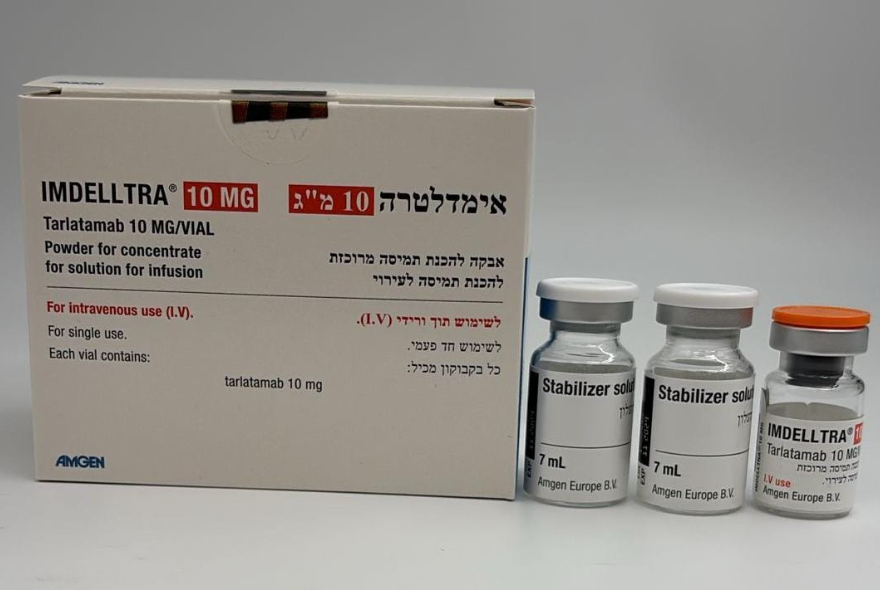
This year, the committee is considering, among other things, the drug Imedaltra, an innovative treatment for advanced-stage small cell lung cancer, after the disease has progressed during or after platinum-based chemotherapy.
This is one of the most aggressive types of lung cancer. The disease is characterized by a rapid rate of progression, and for decades, the options facing patients whose disease recurred and progressed after initial treatment were very limited.
In recent years, a significant development has been recorded in the field for the first time. The new treatment operates through a unique mechanism. It connects immune system cells to tumor cells that carry a protein called DLL3, thereby helping the immune system identify the cancer cell and act against it in a targeted manner.
An international phase 3 study, reported in Israel Hayom, involving 509 patients whose disease had progressed after platinum-based therapy, compared Imedaltra with standard next-line chemotherapy. The results of the study showed that the median survival among patients receiving Imedaltra was 13.6 months, compared to 8.3 months among patients receiving chemotherapy, a figure that represents a 401% reduction in the risk of death during the study period.
Along with the improved survival, the study also observed a lower rate of severe side effects: 54% in patients on imedlatre compared to 80% in the chemotherapy group. The rate of discontinuation of treatment due to side effects was also lower.
The newspaper reported the story of Meir Shmol, 79, from Migdal HaEmek, who was diagnosed with advanced, metastatic, small-cell lung cancer. After chemotherapy and later immunotherapy failed to stop the disease as the doctors had hoped, he was offered a new treatment at the Helmsley Oncology Center in Shaare Zedek. After about a year and a half of treatment, the latest tests showed that there was no evidence of active disease in his body. He said that, in addition to the medical results, he felt that his strength had returned and he had returned to his routine.
Prof. Nir Peled, director of the Helmsley Oncology Center at Shaare Zedek, who treated him, explained to Israel Hayom that this is a particularly significant change in small cell lung cancer, after decades in which the treatment options for the disease have hardly changed. According to him, there are already patients whose disease has disappeared and who live for a long time without evidence of active disease.
However, it is important to emphasize that the response to treatment is not the same for every patient, and the decision on the appropriate treatment is made individually by the treating physician. Along with the significant potential, the treatment also has side effects that require appropriate medical monitoring.
Imedeltra is already registered in Israel for the treatment of adult patients with advanced-stage small cell lung cancer whose disease has progressed during or after platinum-based therapy. In the United States, the treatment received full FDA approval after the results of the advanced study confirmed its survival advantage.
However, for most patients in Israel, a central obstacle still remains: the drug is not currently included in the health basket.
The treatment has already been discussed by the basket committee in the past, but was not included in the basket, among other things due to budget constraints. It is being reviewed again in preparation for the drug basket for fiscal year 2027. According to published estimates, this concerns approximately 140 patients in Israel each year, and the total cost of making the treatment accessible to them is estimated at approximately 30 million shekels per year.
Thus, while for the healthcare system it is a discussion of cost versus benefit and the division of a limited budget between hundreds of essential technologies and treatments, for the relatively small group of patients dealing with the aggressive disease, the discussion is much more personal.