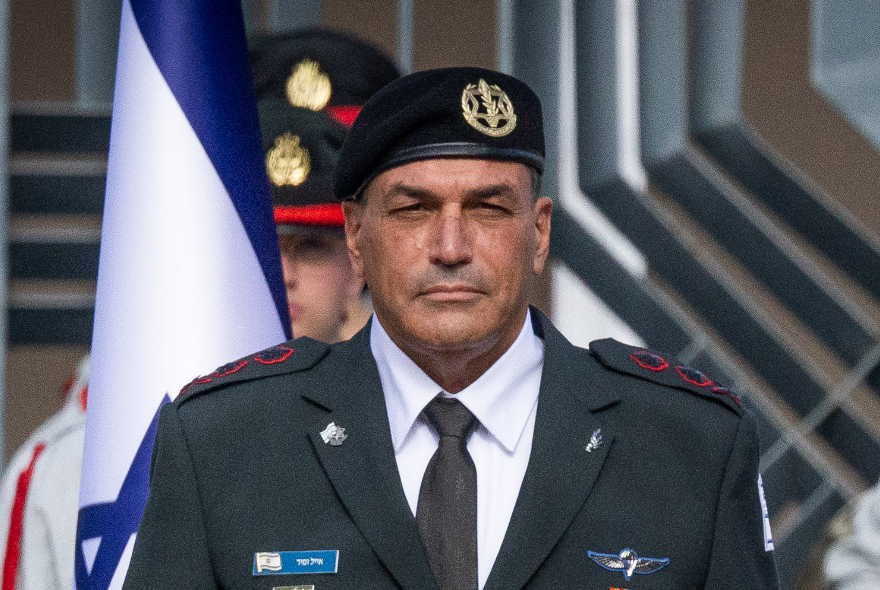
Chief of Staff Eyal Zamir met last week at a ski resort in Germany with army commanders from several Arab countries to discuss the war with Iran and the escalation with the Houthis.
According to a report by Barak Ravid on Channel 12, the meeting - organized by the commander of the US Central Command (CENTCOM), Admiral Brad Cooper, was not officially announced by any of the countries that participated in it.
In addition to Admiral Cooper and Chief of Staff Zamir, the meeting was attended by the chiefs of staff of the armies of Saudi Arabia, the United Arab Emirates, Bahrain, Kuwait, Qatar, Jordan, and Egypt.
Although similar meetings have taken place in the past, this was the first meeting of its kind since the US and Israel launched a war against Iran more than six months ago.
The meeting was a rare opportunity for military commanders from Israel and the Arab Gulf states that do not have diplomatic relations with Israel to meet and exchange views on the war.
Cooper made it clear to his colleagues in the region that the US military has no intention of withdrawing forces from the Middle East, despite Iranian attacks on American bases. He also briefed his colleagues on the US plan to expand vessel traffic in the Strait of Hormuz.
A senior Israeli official said that Chief of Staff Zamir briefed the other participants on IDF activity on the various fronts.
A spokesman for the US Central Command told Channel 12: "Last week, CENTCOM hosted military leaders from eight countries at a planned conference in Germany. The commanders discussed opportunities to deepen security cooperation in the Middle East.".
Cooperation between Israel and countries in the region has tightened significantly since the signing of the Abraham Accords between Israel, the United Arab Emirates, and Bahrain in September 2020.
During the war, Israel operated together with the United Arab Emirates and the United States in both defensive and offensive operations.
Israel deployed the Iron Dome missile defense system to the UAE, along with Israeli troops, and provided the UAE with real-time intelligence, surveillance, and reconnaissance (ISR) assistance. Intelligence cooperation between Israel and other Arab countries in the region also expanded during the war.
The meeting took place as the Houthis escalated attacks against Saudi Arabia, made gains in the ground fighting in Yemen, and effectively took control of the Bab al-Mandab Strait in the Red Sea.
A Channel 12 report quoted a knowledgeable source as saying that Israel has discussed with Saudi Arabia, through CENTCOM, ways in which it can assist Saudi military activity against the Houthis and provide Saudi Arabia with similar assistance in the areas of intelligence, surveillance, and reconnaissance to that which it provides to the United Arab Emirates.
According to a report by Amit Segal, the cooperation with Saudi Arabia against the Houthis is more extensive than is reflected.
Kan News reported that, according to estimates, Israel has already begun transferring intelligence information to Saudi Arabia through the United States.
According to a diplomat from one of the countries in the region, the Saudis requested assistance from the United States, the Americans forwarded the request to Israel - which began transmitting information to Saudi Arabia through the United States, since Israel sees the Houthis as a broad regional problem.
According to a foreign source familiar with the details, American representatives who recently visited Israel said that Israel could provide Saudi Arabia with a great deal of intelligence on the Houthis. The information, which is also based on Israeli experience with the Houthis, who opened a front against Israel after October 7, is primarily intended to ensure freedom of navigation in the Bab al-Mandab Strait.