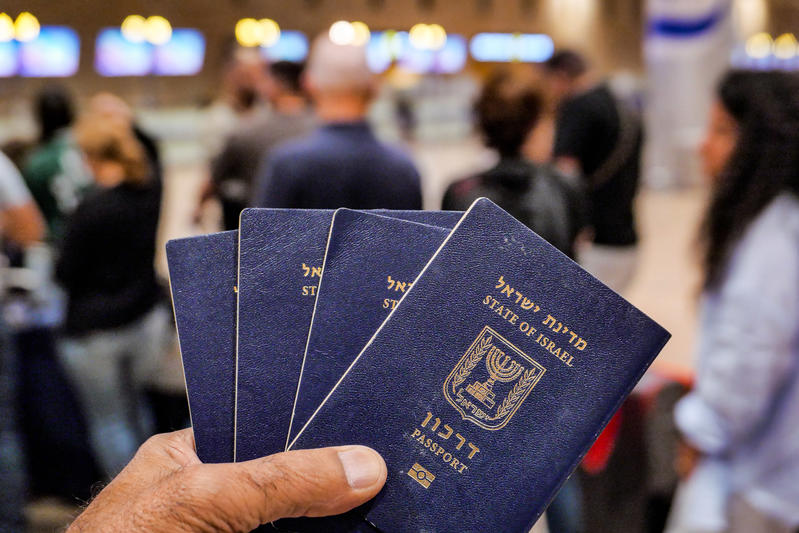
Towards the Tishrei holidays: The National Security Bureau (NSB) today (Sunday) published to the public the latest threat assessment to Israelis abroad from terrorist elements.
Want to hold a 'captive redemption' in the most elegant way? Only with 'Yad L'Achim' • Mekdem
According to the National Security Council statement, the war and the ongoing conflict with Iran, Hezbollah, Hamas, and other factors have expanded the scope of the risk posed to Israelis around the world.
According to the statement, alongside increasing attempts to promote terrorist attacks by Iran, Hezbollah, Palestinian terrorist organizations, and global jihad organizations, the anti-Israel narrative continues to worsen, which is expressed, among other things, in incitement campaigns, "leading to a sharp increase in the motivation of terrorist elements to attack Israeli and Jewish targets.".
A notable milestone is the third anniversary of the October 7 massacre - which could be a focus for protest demonstrations alongside increased efforts to promote terrorist attacks.
The main points of recent developments in the context of terrorist threats against Israelis around the world:
It was clarified that Iran and its proxies remain the main perpetrators of global terrorism against Israelis and Jews around the world. "Iran's leadership is also motivated by a strong desire for revenge for the harm it has suffered in recent years," the headquarters statement said, according to which Iran is promoting a variety of actions through the terrorist organizations it operates alongside various proxies, including criminal organizations, while focusing on attacking diplomatic missions, senior Israeli officials, security personnel, Jewish community institutions, and even casual Israelis wherever they may be.
It was also noted that the Hezbollah organization also poses a significant potential threat.
The Hamas organization is also investing significant efforts in establishing terrorist infrastructures on European soil and in other countries, with the aim of carrying out revenge/show-off attacks against Jews and Israelis.
At the same time, ISIS and al-Qaeda continue to spread explicit calls to harm Jews. This threat is particularly prominent in Africa and Asia, but there is a continuing desire to carry it out in European capitals and the United States as well, including through individual attackers or local initiatives.
The Houthis also call for attacks on Israel and Israelis who come to the Somaliland arena and Africa, against the backdrop of their perception of the Israeli presence on the continent as a threat.
Regarding lone-wolf terrorism, it is written that a significant increase has been observed in the execution of lone-wolf attacks around the world against Israeli or Jewish targets. Since the outbreak of the war, 25 Israelis or Jews have been killed in terrorist attacks abroad.
The National Security Council emphasized that this is a distributed and unpredictable threat stemming from ideological extremism - stemming, among other things, from the growing anti-Israel online discourse. These are attackers who often operate independently against "soft" and accessible targets, such as mass events, gathering sites, community and prayer centers, and more.
Threat hotspots: The dangerous destinations for Israelis abroad
Iran's Encirclement: Countries surrounding Iran are still exposed to terrorist activity from Iranian terrorist infrastructures on the ground and as a result of their geographical proximity. Among these, Azerbaijan, Turkey, and the United Arab Emirates stand out.
Jordan, Qatar, Somaliland and Egypt, including the Sinai Peninsula: Level 4 travel warning. Stay should be avoided completely.
Connecting and transit flights: Stopovers in countries with a threat level of 4 should be avoided as much as possible. In addition, staying outside the terminal in these countries is prohibited.
Countries prohibited from entry by Israelis by law - real danger to life: Iraq (including the Kurdistan Region), Yemen, Iran, Syria and Lebanon. By virtue of the law prohibiting infiltration, Israeli citizens, including those with dual citizenship, are prohibited from entering these countries.
High-risk countries or restricted access: Saudi Arabia (restricted access by law), Bangladesh, Somalia, Pakistan, Afghanistan, Libya and Algeria - entry into their territory should be avoided.
Recommendations for preventive behavior and precautionary rules:
Identity privacy: Avoid displaying Israeli or Jewish symbols such as a kippah or Hebrew shirts. In countries where the travel warning is level 3, it is suggested to limit speaking Hebrew in crowded places.
Information and digital security: Real-time location posting should be completely avoided. Moderate, block, or remove any content indicating service in the security forces (regular, permanent, or reserve) from social networks in order to prevent personal marking as a target for harassment or harm.
Vigilance: Increased attention is required for unusual activity near Chabad houses, kosher restaurants, and synagogues, along with vigilance for suspicious objects and suspicious figures not related to the structure or event.
Staying away from sources of friction: One should stay away from demonstrations and protests and avoid any political discourse with foreign elements.
Handling an emergency: In any case of suspected exposure to a threat or attack, the local security forces should be contacted first and without delay, and only then should the Israeli assistance centers be notified.
It was also recommended that travelers traveling abroad have the emergency numbers of the local security forces at their destination; and it was suggested that they avoid traveling to countries with which Israelis do not have diplomatic ties.