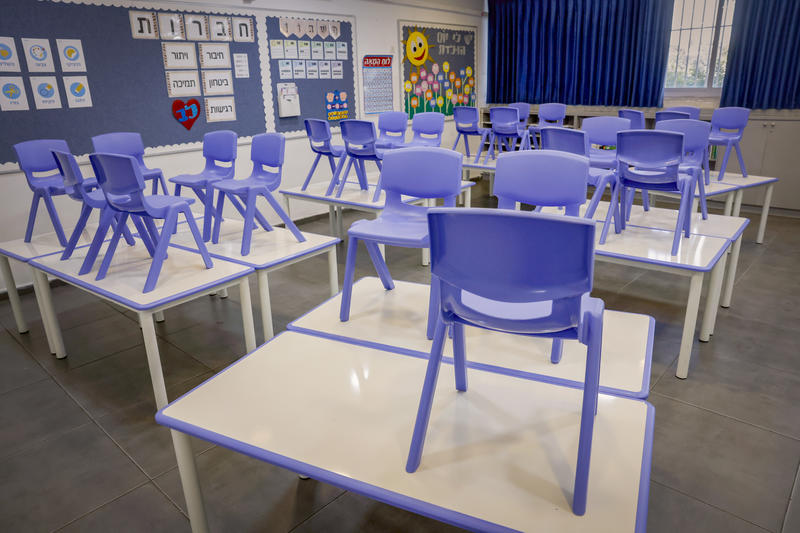
Approximately 2.6 million students began the 2017 school year this morning (Tuesday) and returned to kindergartens and schools across the country, following the end of summer vacation.
The school year opened without threats of a strike from teachers' unions.
For about 180,000 children, this is a particularly exciting morning: they say goodbye to kindergartens and enter the school gates for the first time as first-grade students. At the same time, about 143,000 twelfth-grade students are starting their last year in the system this morning.
There are 27,757 educational institutions operating throughout the country, of which 21,800 are kindergartens and 5,957 are schools. 418,385 students, representing approximately 161% of all students, are eligible for special education services - an increase of 91% compared to last year.
Starting this year, middle school students will be prohibited from using mobile phones on school grounds. The ban will also apply during breaks between classes.
The start of the year takes on special significance in the communities surrounding Gaza: In the Takuma region, 22,233 students are starting the school year in Sderot and the regional councils of Eshkol, Ashkelon Beach, Sdot Negev and Shaar Negev.
This is an increase of approximately 91% in the number of students compared to the evening of October 7, and an addition of 1,802 students. The figure comes at the same time as the region's communities continue to return to their homes after the prolonged evacuation period.
The 2017 school year opened across Binyamin, as the children of the largest council in the country returned to kindergartens and schools and began a new year.
More than 30,000 children and teenagers between the ages of 3 and 17 currently live in Binyamin, and the average age of the council's residents is only 10, a figure that illustrates the youthful nature of Binyamin's population.
One of the main emphases at the beginning of the year was adapting the education system to the developing settlement map in Binyamin. Along with continuing to strengthen the education system in the old settlements, the council for the first time included as part of the work plan the new settlements, farms and hills, where new communities and families have been establishing themselves in recent years. Accordingly, a goal was defined of building a continuum of educational solutions adapted to the new settlement reality, so that the growth of the settlement will also be accompanied by the development of the educational solution required for the families and children living there.
In total, the education system in Binyamin began the year with 193 kindergartens, 37 elementary schools, and 26 post-primary institutions in formal education. Alongside them, 61 kindergartens, nine schools, and three post-primary institutions operated in private education, as part of the larger education system spread throughout the council's communities.
Education Minister Yoav Kish celebrated the start of the school year: "Everything opened well. There are almost no shortages of teachers in the districts. The problem is in the Central District and Tel Aviv, where we still have gaps of about 150-200 teachers.".