Does the ultra-Orthodox public have equal rights in the State of Israel? Judging by the data, it appears that vital government information – from emergency and health guidelines, to civil rights awareness, and employment, to preventive medicine – has been withheld from the sector for many years.
For decades, government ministries and public bodies poured huge budgets into information campaigns that were not tailored to the ultra-Orthodox public - neither in language, nor in values, nor on the right platforms. The information simply did not reach its destination.
This exclusion, along with the lack of appropriate information, has harmed the ultra-Orthodox public, which has become the most disadvantaged sector in Israel.
So what is the solution?
A professional body that understands the sector - which many times a foreigner will not understand; a body that understands that the Haredi public deserves tailored, professional, and eye-level government information, and that it is entitled to professional information budgets, just like any other sector.
Just as the state invests in campaigns tailored to Arab society, the Russian audience, or young people on social media, so too does the Haredi public have a fundamental right to receive government information that is accessible to them and speaks in their "language.".
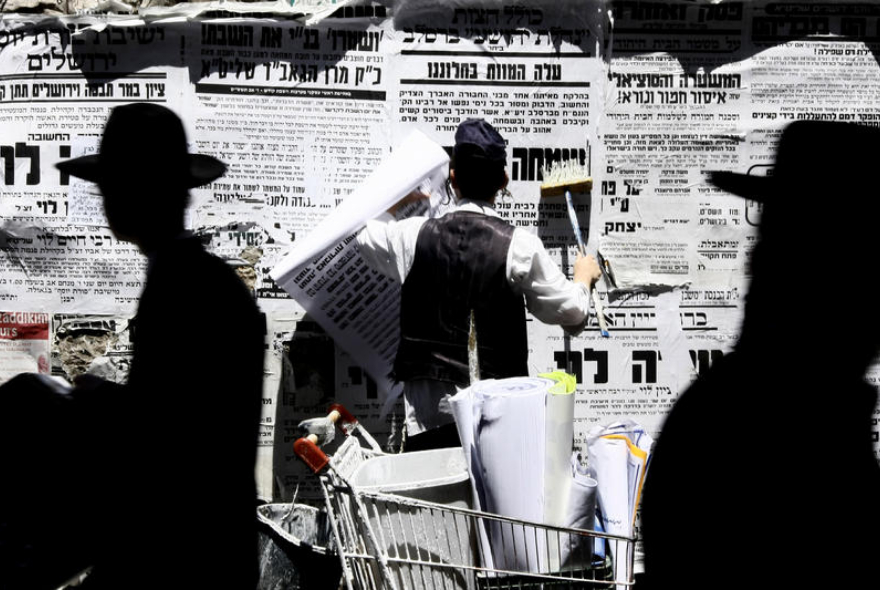
Indeed, making information accessible is not limited to putting up a poster or advertising in a single Haredi newspaper. Professional outreach means working just like with any other sector - with adapted language and dedicated digital tools.
Lack of understanding, hypocritical criticism
In recent days, a dedicated campaign ahead of the Tisha B'Av fast has encountered hypocritical criticism, stemming from a lack of understanding on the part of the media. This is an example of correct health information reaching the target audience - and aimed at preventing hospitalizations and medical overload.
But the external criticism stems from a lack of understanding of the community and media structure of the Haredi sector. What may seem like a whim from the outside is in fact a direct channel for conveying a message to tens of thousands of households in the Haredi public.
Sources involved in the field say: "There is talk about this specific campaign ahead of Tisha B'Av, but the real discussion is about the fact that for years we have complained that the state does not know how to talk to the Haredi public. That there is no information, that information about health, rights and safety simply does not reach us. Finally, a government body has been established that takes responsibility and makes information available in a language we understand. This is not a curiosity - this is a basic civil right.
""When a government ministry invests in a digital campaign tailored to young people or other sectors - it's called 'innovation and professionalism.' When there's a body that does exactly that for the Haredi public - suddenly they criticize. It's time to understand: Hasbara tailored to the Haredi sector is not a privilege, it's a correction of ongoing deprivation.".