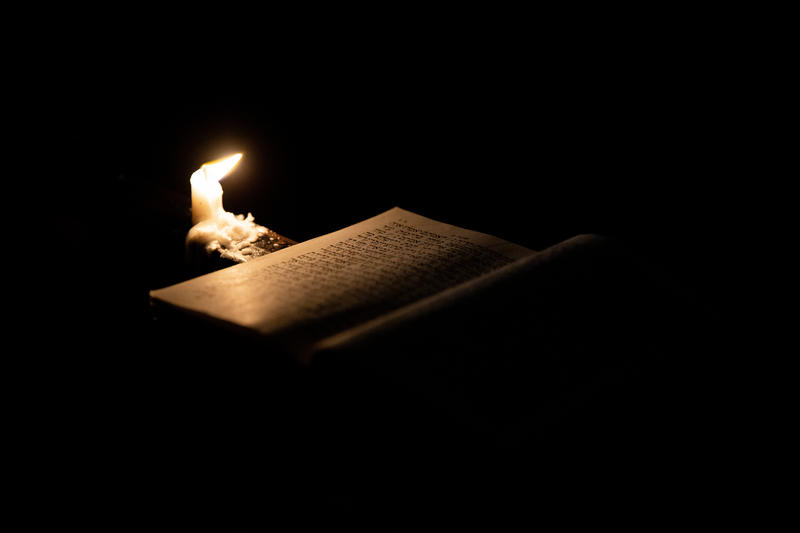
The fast of Tisha B'Av begins at sunset on Wednesday, July 22 2026, and it ends with the rising of the stars on Thursday July 23 2026.
⌚ For the exact time of the start of the fast in your location, Click here. For the exact time of the end of the fast in your location. Click here
Times for the beginning and end of the fast in selected cities:
| Fasting begins on Wednesday, July 22, 2026: | End of the fast – Thursday, July 23, 2026 | |
|---|---|---|
| Jerusalem | 19:43 | 20:10 |
| Tel Aviv | 19:45 | 20:12 |
| Beer Sheva | 19:43 | 20:10 |
| Haifa | 19:46 | 20:13 |
| Tiberias | 19:44 | 20:11 |
| Eilat | 19:39 | 20:05 |
| New York | 20:21 | 20:52 |
| London | 21:03 | 21:45 |
| Paris | 21:43 | 22:21 |
| Athens | 20:43 | 21:13 |
| Batumi | 20:41 | 21:13 |
| Barcelona | 21:18 | 21:50 |
❌ 🍴 From the beginning of the fast until the end of the fast, one does not eat or drink anything. (The sick, the elderly, women in certain states of pregnancy, etc. should consult a rabbi to decide how they should behave during the fast. Even those who are not fasting – upon the instruction of a rabbi – should refrain from eating delicacies or unnecessary eating.).
In addition to fasting from food and drink during Tisha B'Av, we abstain from pleasure and festive activities and mourn the destruction of the Temple. These are the mourning customs of Tisha B'Av:
❌ 🥾 Do not wear leather shoes, or shoes that contain leather parts.
❌ 💺 Sitting on low chairs until midnight (Click here to know the exact time).
❌ 🚿 Do not wash with water (not even cold water). When washing hands, pour water only on the fingers and not on the palm of the hand. (It is permissible to wash an area that has become dirty with water).
❌ 🧴 Do not apply any body lotions or oils to the skin.
❌ 😀 They do not greet each other with peace and do not send gifts.
❌ 👔 Don't wear holiday clothes.
❌📚 From Wednesday noon until the end of the fast, Torah is not studied, as Torah is joyful and "restorative of the soul." However, it is permissible and even desirable to study Torah topics that deal with the destruction of the Temple and the events of the day.
Before the start of the fast, on Wednesday (July 26) afternoon, the "breaking meal" is held: a meager meal of egg and bread dipped in a pinch of ashes (which symbolize mourning and destruction), which is eaten in solitude and in a heavy atmosphere.
At the beginning of the fast, the synagogue removes theParochet fromthe Holy Ark, darken most of the lighting and after evening prayer, read together the scroll "Ayka" describing the horrors of the destruction. The cantor reads the scroll aloud while the worshipers join in quietly. After that, "Kinot" - sad piyyutim written for Tisha B'Av are read. In 2026, we will read the scroll On July 23 In the evening.
It is interesting that although the Book of Lamentations tells of the destruction of the Temple, it was actually written before that as a warning to the people of Israel to repent.
To read the Book of Lamentations, click here.
To read the story behind the Scroll of Lamentations, click here
The "Laments" are poems composed by the sages of Israel lamenting and mourning the destruction of the Temple and Jerusalem.
It is customary to read a few laments. On the night of Tisha B'Av (July 23) After the Book of Lamentations, and many laments after the morning prayer of Tisha B'Av morning (July 24) up toMidnight today.
🙏 When you take hands On the morning of Tisha B'Av Pour water only on your fingers, without letting the water touch your palm, andWith the blessings of dawn Skipping the blessing "He has fulfilled all my needs.".
Unlike other days of the year, onMorning prayer One does not put on tefillin or wrap oneself in a tallit (this is done later in the day). After Torah reading In the synagogue, the "Laments" are read.
📖 Place Tefillin and wrap themselves inTallit Only in the afternoon, during the evening prayer.
🕑 In the afternoon of the fast A certain relaxation is made in the mourning customs: in the afternoon, it is permissible to sit on ordinary chairs, and preparations can also be made for the meal after the fast (the meal at the end of the fast should be simple, without meat and without wine).
In the synagogue, the curtain is returned to its place, and during the mincha prayer, tefillin are placed and a tallit is wrapped. A special section called "Nehem" is added to the Amidah prayer, which includes requests for the rebuilding of the Temple.
🚰 After the fast is over, there is Wash your hands as usual every morning. (The water is also poured onto the palms of the hands), but this is done without reciting the blessing of taking the water. The mouth and face are washed (during the fast this was forbidden), and it is also permissible to wear leather shoes.
🌙 It is customary to hold it at the end of the fast. Blessing of the Moon (or: Blessing of the Moon).
Since the burning of the Temple continued until the day after Tisha B'Av (Twelfth of Av) at noon, we continue The nine-day mourning customs Until midnight on the 10th of Av. Despite this, this year (2026 - 5775), it is permissible to get a haircut in honor of Shabbat and also to wash for Shabbat immediately after the fast ends. The remaining mourning laws (eating meat, drinking wine, bathing for pleasure, etc.) The Prohibitions of the "Nine Days""), continuing until midnight on Friday, June 24th at noon.