
Are families who won a discounted apartment in a government lottery, waited for years for the apartment, and only recently discovered that the project they were assigned to got complicated and was canceled - entitled to compensation from the state?
This question is at the center of an increasingly escalating legal conflict surrounding the 'Keter Harama' project in Ramat Beit Shemesh D, an area of significant ultra-Orthodox demand, which has benefited hundreds of families, most of them from the ultra-Orthodox community.
The largest group of buyers in the 'Keter Harama' project includes over 400 winners, and is represented by Attorney Emmanuel Yuzuk, from the Yuzuk-Malkin & Co. law firm.
Attorney Yozuk recently sent warning letters to the Israel Land Authority and the Ministry of Construction and Housing, in which he claimed that the authorities knew, or at least should have known, that the giant project was not progressing as expected.
Despite this, it is claimed, these entities did not warn the lottery winners about the danger in which their winnings were placed - information that could have helped them to consider their steps and consider alternatives.
According to Attorney Yozuk, for years the families continued to rely on the fact that they had won an apartment in the 'Apartment at a Discount' lottery, did not look for an alternative housing solution, lost a lot of time and money, and now it is not at all clear who will compensate them for the losses they incurred, which amount to hundreds of millions of shekels.
The 'Keter Harama' project was marketed as part of a government program to purchase 'apartments at a discount.' For the winners, this was a significant opportunity to purchase an apartment in a sought-after area at a price below market prices.
About four and a half years ago, the families received their winning notifications, and many of them planned their lives around the understanding that they would move into their new apartment in Beit Shemesh as promised, during April 2024, the official date for the delivery of the apartments.
The project itself was supposed to be built in a relatively complex "design and build" format. Unlike a regular project, in which the state develops the land and transfers plots ready for construction to the contractor, here the developer was supposed to develop an entire complex, including infrastructure, residential buildings, public buildings and environmental development. In other words, not just building apartments, but building a new neighborhood almost from scratch.
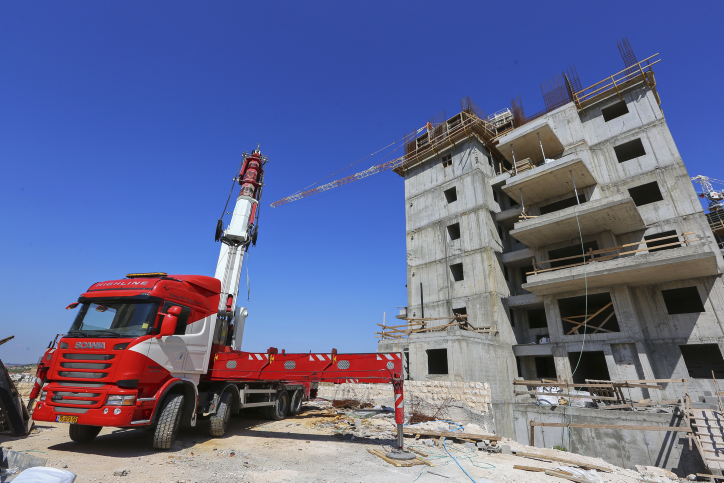
However, over the years it became clear that for a long period, the project made little progress. Only partial work was visible on the ground, with skeletons of buildings and lots remaining undeveloped.
The crisis was caused by a conflict between the companies that were supposed to promote the project, Shafir and Nativ Pituach, and the state. The Ministry of Housing claimed that the companies did not promote the project in accordance with their commitments.
On the other hand, the companies attribute the delays to external circumstances, including the war, delays in obtaining permits, a shortage of workers, bureaucracy, and rising costs.
But according to Attorney Yozuk, the central question is not just who is to blame for the conflict between the state and the developer, but why the winners of the project were not informed in real time about the difficulties in the project, and what will now happen to their winnings.
A few days ago, the winners received a notice stating that there were problems with the developer, and therefore they are allowed to participate in another lottery even though they have already won the project. According to Attorney Yozuk, this notice only exacerbated the uncertainty they find themselves in.
""On the one hand, participating in a new lottery may provide them with an alternative in finding an apartment; but who knows when and if they will win and what the delivery date will be," says Attorney Yozuk. In addition, he claims, the economic benefit in the original project is considered much more significant than the discounts currently offered in some of the new lotteries.
According to estimates made around the project, the gap between the original winning price and the current value of the apartments could reach about a million shekels per family. Therefore, from the perspective of the winners, giving up the original winnings is in fact giving up a huge sum, which a family in Israel has great difficulty saving throughout their lives.
According to Attorney Yozuk, winning the lottery grants them a right of real economic value, granted to them as part of a government program, after they met the conditions set by the state itself - and therefore its loss, which has nothing to do with their actions, should yield them appropriate compensation.
In his demand, Attorney Yozuk asks the Ministry of Housing and the Ministry of Housing and Urban Development to receive clarifications and provide immediate solutions following the cancellation of the development agreement with the developer. He wants to know what the outline is for continuing the project, whether an alternative developer will be appointed, under what conditions this will be done, how the rights of the winners will be preserved, whether they will be required to pay updated prices, and what the new schedules are for the delivery of the apartments.
According to him, the winners met all the threshold conditions set by the state, produced all the certificates and documents required of them, and accordingly received winning notifications.
It was the state that managed the tender, declared the families the winners, and made them rely on winning for years.
According to Attorney Yozuk, the Ministry of Housing and the Housing and Urban Development Authority did not properly supervise the developer, and allowed the situation to deteriorate for years without updating the winners on the status of the project for approval. According to him, the authorities have an increased obligation to act transparently, fairly, and quickly, and not leave the families without a solution after years of waiting.
""Therefore, the state cannot be satisfied with a laconic announcement that the project has become complicated, and that the tenants are invited to participate in a new lottery," argues Attorney Yozuk. "It must explain what it knew, when it knew, why the winners were not notified in time, and how it intends to protect their rights.".
Attorney Yozuk calls on representatives of the Housing and Home Affairs Ministry to hold an urgent meeting with him and the representatives of the hundreds of families he represents.
The purpose of the meeting is to formulate a practical solution that will clarify how the families' winnings will be preserved, which developer will continue the project, will the original prices of the apartments promised to the winners be preserved for them, and what is the timetable for when the families will be able to receive their apartments?
In the letter, Attorney Yozuk gives the authorities 14 days to respond. According to him, if a substantive and satisfactory response is not received, he will have no choice but to turn to the legal courts without further notice.