
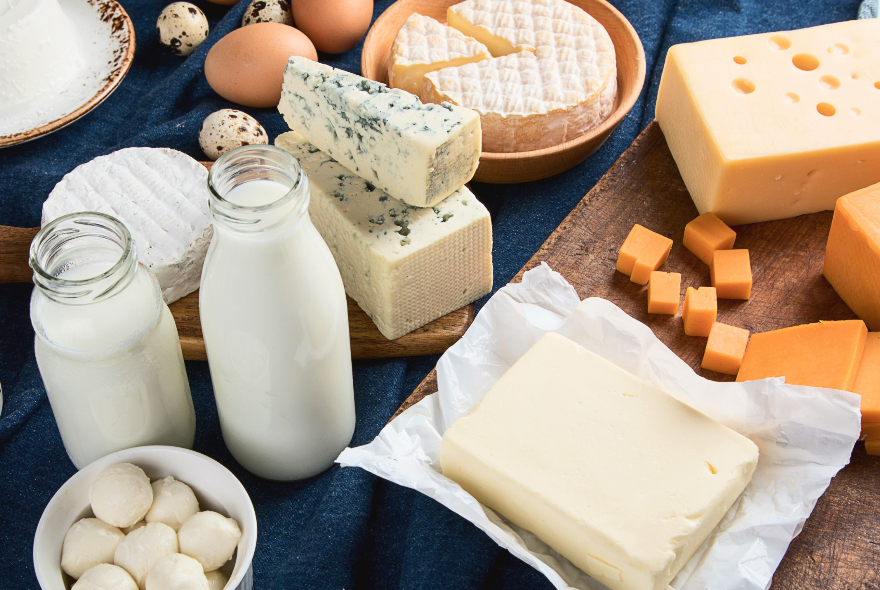
In preparation for Shavuot, cheeses return to center stage: white, salty, soft, hard, fatty, lean, traditional and industrial.
Behind this diversity lies a simple truth: nutritionally, not all cheese is created equal.
Veronica Meisler, a clinical dietitian using the NLP method and consultant for Herbalife, explains the health effects of cheeses: What really differentiates the types of cheeses, and why the important question is not only how much fat they contain, but what protein they contain, how much water and lactose remain in them, what is the level of processing, and what ingredients were added along the way.
Meisler: "It is not one component that determines, but the overall structure of the food and the way its components work together in the body. Therefore, it is not worth treating all dairy products as one: the health effect varies depending on the type of product, fermentation, structure, and level of processing.".
“The most common mistake,” emphasizes Meisler, “is to think that cheese is mainly about fat content. In reality, cheese is a complete system: the type of protein, the amount of liquid, the lactose content, the ripening time, the amount of salt and the list of ingredients. Two cheeses can look similar on the shelf, and behave completely differently in the body.”.
The first distinction to make is between traditional cheese and processed cheese products: Traditional cheese is usually made from milk, rennet, salt, and enzymes, and sometimes undergoes a ripening process. In contrast, processed cheese is created by re-mixing cheeses with heat, emulsifiers, and other ingredients to produce a uniform, spreadable texture.
Another distinction to make is between fresh and aged cheeses. Fresh cheeses such as white cheese, cottage cheese, and ricotta contain more water, sometimes more lactose, and their protein texture is more delicate.
In contrast, hard, aged cheeses, such as cheddar, parmesan, or gouda, are denser, contain less water, and in many cases less lactose. As the cheese ages, some of the milk sugar breaks down or drains out, so people with lactose sensitivity may feel better with aged cheeses.
An unusual cheese in the cheese world is ricotta. It is a whey cheese, meaning it is made from the liquid part left over after other cheeses are made. This means that while most cheeses are based on casein protein, ricotta contains more whey proteins - proteins that are faster to digest and absorb.
List of ingredients
You can also find clear clues in the ingredient list: “real” cheese will often have a short ingredient list. On the other hand, when stabilizers, starches, thickeners, flavors, or non-milk fats are added, it is likely a more processed cheese product - this does not make it “forbidden,” but it does distance it from the original cheese.
And what about the fat percentage? Very low-fat cheese may be less tasty, less satisfying, and sometimes more processed. On the other hand, higher-fat cheese is not necessarily “less healthy,” especially if it is a traditional cheese, consumed in reasonable quantities as part of a balanced meal.
So how do we choose the right week?
Varied! Combine fresh and aged cheeses, check the ingredient list, and not just the fat content. Those who are lactose intolerant will often prefer hard, aged cheeses, those looking for satisfying protein will find it more in dense, less foamy cheeses, and those who come across a “cheese-flavored product” on the shelf should stop for a moment and ask: Is this really cheese?
Remember: there is no need to choose “one perfect cheese,” but rather a cheese that suits the need, the context, and the person eating it.
As with many things in the world of nutrition, here too - not all cheese is created equal, but every cheese can have its own good and beneficial place on the plate.